Monday, August 6, 2012

SLOW MANATEES, THE REST OF US, LIGHTNING BOLT & THE SPEED OF LIGHT!

Speed. That five letter word that endlessly fascinates the human spirit. That word that inspires awe and lurks somewhere behind every technological innovation. It’s not just how well but also how fast. Ability is often judged on that even in the boardroom. Why! the very basis of computing evolution is premised on speed. So also are advances in transportation.

Speed connotes breath-taking abilities. No wonder it is the stuff of movie buffs as well. Remember Keanu Reeves et al some years back in the movie “Speed”? Okay granted your memories have been dimmed by the effluxion of time, but this trailer should remind you.

The best transport policies are those that create the enabling environment to move people and things from one point to another in the most convenient manner and in the fastest or most efficient way. Thus at the very heart of transportation lies speed and convenience.

The Olympics fever is on right now and the fastest race on the planet, the 100 m men’s finals was on with a vengeance last night. The plot and sub plots leading to the finals were entertaining in their own right. So also where the participants. Suffice it to say that the actual race was quite a spectacle. I aim to please. So here you go. Enjoy this full video recap of the 100 m race.


For readers of this blog who have been wondering where they can stay in touch with all the action of the Olympics, just go here. It’s the YouTube live channel dedicated to live broadcasts of the Olympic. You can actually watch the Olympics live from your device anywhere in the world by going there.

Since he started his career in 2001, Usain Bolt has won a record 28 Gold medals across major competitions and still counting. If yesterday was anything to go by, he could well add to that haul before the end of the 2012 London Olympics.

The current 100 metres world record held by Bolt is 9:58s. That is simply mind blowing. But three years ago on the 17th of May 2009, in the 150 m race at  Manchester, United Kingdom, Bolt ran a 14.35s world best time. But that is not what I am getting at. The man who just yesterday in London smashed the Olympic record in his 9:63s run, in that  2009 (150 m) race, ran the last 100 m in 8.70s, the fastest ever recorded time over a 100 m distance. This would equal an average speed of 41.38 km/h. Waoh!

It got me thinking (as usual Embarrassed smile). How does this Cheetah of a man compare per speed to devices, event, phenomena and processes?

In other words just for fun where is he (and of course little we!) on the totem pole in terms of speed?

Let’s find out.


Selected Speeds (Slowest to Fastest)
m/s km/h device, event, phenomena, process
10−9 ~ 10−8 continental plates, fingernail growth, hair growth
10−4 human sperm cells
10−3 snails
0.013 0.045 ketchup pouring from a bottle
10−1 sloths, tortoises, turtles
0.5–1.3 1.9–4.6 cockroaches
1 3.6 nerve impulses, unmyelinated cells
1 3.6 ocean currents
1.14 4.10 manatees
1.3 4.8 human, typical walking pace
2.391 8.608 fastest human: swimming (César Cielo)
8 30 maximum comfortable elevator speed
10 40 dolphins, porpoises, whales
10 40 falling raindrops
10.438 37.578 fastest human: running (Usain Bolt)
12 43 stadium wave
14.693 52.894 fastest human: ice skating (Jeremy Wotherspoon)
18 64 champagne cork
20 70 rabbits, hares, horses, greyhounds, tuna, sharks
30 100 typical freeway speed limit
33 118 cheetahs
36.805 132.50 fastest human: cycling (Sam Whittingham)
40 140 falling hailstones
33–83 120–300 hurricane, maximum sustained wind speed
30–90 105–330 tornado, maximum sustained wind speed
46.03 165.7 fastest human: baseball pitch (Joel Zumaya)
55 200 typical terminal velocity of a skydiver
69.31 249.5 fastest human: tennis serve (Andy Roddick)
69.833 251.400 fastest human: skiing (Simone Origone)
80 290 peregrine falcon in a dive
83 295 very fast golf ball
100 360 nerve impulses, myelinated cells
114 412/431

fastest street-legal car ( Formerly held by Ultimate Aero TT SuperCar. The car's record was broken on July 4, 2010 and is now held by Bugatti Veyron)

142.89 511.11 fastest ship (Spirit of Australia)
148.463 534.467 fastest motorcycle (Fueling Advanced Technologies)
159.7 574.8 fastest train (Train à Grande Vitesse)
180–1200 650–4,400 bullets
200 700 tsunami
250 900 commercial jet airplane
274 988 fastest human: skydiving (Joseph Kittinger)
331 1,190 speed of sound, STP
340 1,225 speed of sound, sea level
341.112 1,228.02 fastest experimental car (Thrust SSC. first car to officially break the sound barrier!)
343 1,235 speed of sound at room temperature
980.433 3,529.56 fastest airplane (SR-71 Blackbird)
1,500 5,400 speed of sound in water
2,000 6,000 seismic waves
6,900 25,000 detonation velocity of TNT
8,000 29,000 space shuttle in orbit
11,180 40,250 escape velocity
15,543 56,000 Voyager 2 space probe
17,100 61,600 Voyager 1 space probe
29,790 107,200 earth in orbit
220,000 790,000 sun moving through the milky way
250,000 900,000 solar wind near earth
600,000 2,200,000 milky way through the local super group
124,000,000 446,000,000 speed of light in diamond
299 792 369 1,079,252,530 protons and antiprotons in the Tevatron, Fermilab
299,792,458 1,079,252,850 speed of light in a vacuum
Table Source

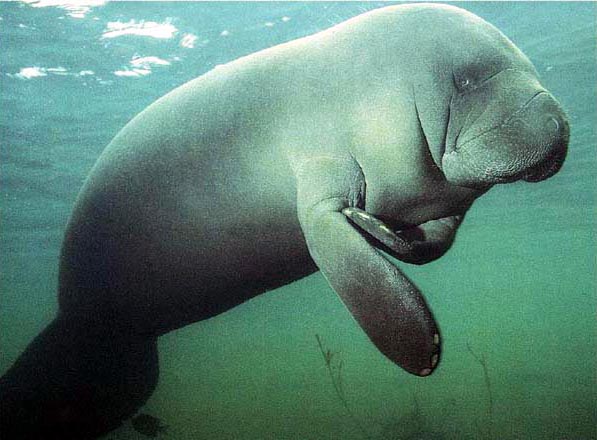
Since I am utterly obsessed with all things pertaining to the sea, air, land and poetry (isn’t that basically everything?Hot smile), I took note of the walking speed of humans-4.6 km/h and discovered that while the rest of us (mere mortals) can brag that we are faster than manatees (a sea creature pictured below), sloths, tortoises, turtles (the tortoise may argue otherwise but we are definitely faster!) and cockroaches; Bolt at his peak can in addition prevail over maximum comfortable elevator speed; dolphins, porpoises, whales and falling raindrops! Incredible innit?


Manatee

So there you are, today’s post is a wrap!

Oh common you didn’t think I would let you go without a music vid, did you? I ain’t that mean.

Bolt is Jamaican. I am eclectic. You all wish you could move with the speed of light. This blog is currently based in Asia. So what better video encompasses all four? What better band than one whose music themes run through electronica, rapcore, dub, dancehall and ragga, also using rock instruments and  acknowledging a punk influence?

The decidedly ragga jive of this one by  Asia Dub Foundation  is my tribute to Bolt. While humanity is still light years away from running at the speed of light, many people already live at the speed of light which is not necessarily a good thing!

“There's a devil on my shoulder making me dance
There's a spring in my step up to heavy hearts
Appointments and deadlines sprout up like weeds
Can't tell what I want from what I need
Find a place in my head that's less wrong than right
No more living, living at the speed of light

Check out the full lyrics here, but not before you tap your legs to the video!

Au revoir!

Friday, July 27, 2012

MEN DIE. SHIPS DIE. BUT WHERE DO SHIPS GO?

I don’t mean to spoil your mood today. Neither do I want to sound morbid. Far from it. Ignore the ominous ring to the title of this post. Men Die. It is an inevitable fact of life. The rich die. The poor die. Sinners. Righteous men. Atheists. Agnostics. Agnostic theists. Agnostic atheists. Kings. Commoners. For humanity the grave is a commonality.

Many have theorised on where men go when they die. Everybody seems to have an idea. Even those that don’t believe in anything including themselves. But where do ships go when they die? What happens to the “carcass” of the ship? Is the ship sent into the abyss of nothingness in glamour forever remembered by the incidents and service that dodged it’s path while in it’s prime? 

We will find out by the end of this post. But first take a look at this picture.


Image Source

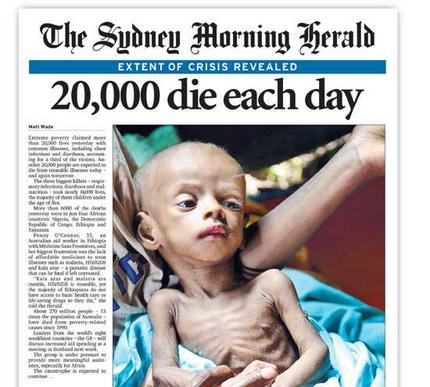
The boy in the picture is symbolic of a scourge that has plagued society from time immemorial. Though Epidemiologists do not conceive it as a disease.  Many have called it just that. Others have used very colourful language to describe this very colourless state. I am one of those who believe that disease is hopelessly inadequate to describe it. A disease is said to be an abnormal condition affecting the body of an organism. This one affects not only the body, it affects the mind and spirit. (but for my lack of definite knowledge of the hereafter I  would have added the soul too! Yes it is that bad) It is a vicious, life sucking, personality distorting, dignity usurping manacle. Yes it is. I am not exaggerating. Neither are the ones who have used even more seemingly disproportionate language like the one inked in this jpg:

Image Source

I truly admire anyone who has had to battle rock bottom abject (debasing, low, vile,-add your own synonym) poverty and made it to the top legitimately without been involved in illicit activities in the process.Thumbs up

If you think that poverty does not deserve all the epithets hauled at it, then chew on this.

In our world today (as we speak) 2.7 billion people live on less than $2 a day. 1.1 billion on less than $1 per day. 18 million of our fellow humans die each year from poverty-related causes. You do the maths. Nearly 3 billion people in a global population of a little over 7 billion fall squarely within the poverty benchmark. If you increase that benchmark a little to include what it takes on the average to live a normal life in this world that does not compromise on human dignity (e.g. three square meals, clothing and shelter) then we could be talking as much as 5 billion people.

The statistics are indeed frightening.

Lest you think poverty is endemic to a particular region. Poverty though prevalent in certain areas certainly has a global spread. Poverty truly transcends national boundaries.

Image Source

Analysts' estimates that some 47 million people in the United States, or 1 in 6, were poor in 2011. With economists like Nouriel Roubini ({affectionately?} dubbed Dr Doom {by who?}) quashing recent hopes of a global growth recovery in the fourth quarter of this year, expect the figures to climb almost everywhere.

How come I am obsessing about poverty today? Well for one it is worth obsessing about. Don’t get me wrong. It is worth obsessing about in that positively minded exhilarating way that seeks solutions, a cure for the malady if you will, in individual, community, national or global ideas and endeavours.

Secondly poverty happens to be central to the theme of today’s post. Poverty is really terrifying. I dare say that poverty is first cousin to death. To be poor is to die in instalments.

Today’s post necessitates the elaborate prefix and focus on poverty. In a jiffy, you would realise just why.

In the previous two posts which you can access here and here, we discussed Seafarer’s rights. Today we would focus on a group that is part of the Maritime industry- onshore workers at the very bottom of the maritime labour chain.  They are for want of a better word “undertakers” of dead ships. They administer the “final rites of passage” to ships. Now is a good time to ask again the question we asked in the beginning of this post. Where do ships go when they die?

It is time to find out.

I remember sitting  and watching a YouTube clip in an International Regulation of Shipping class  taught by Professor Alan TanDirector, NYU School of Law and NUS Dual Degree Program (NYU@NUS) earlier this year.

I still remember the bile I felt that day when the clip was played in class. I must warn you, if you have a heart the clip is quite traumatizing. Viewers discretion is advised as it contains disturbing images towards the end.

Now you know where they go. Surprised? If the job is hazardous and menial you can almost always guess the answer.

They go to graveyards mainly in developing countries. That employ dirt poor ‘undertakers’ who are forced to administer very dangerous ‘ final rites of passage’ as a result of the abject poverty that is their lot. They are forced to literally die (as some of the workers put it) that their family may live. Surely these workers deserve better working conditions at the very least. In conditions worse than modern day slavery, global trade and the quest for unconscionable profit harvests the blood of these ones. Charles Kernaghan the narrator in the clip you just saw describes it as criminal. I totally concur. It is not only criminal. It is harrowing.

Since 2009 when that video was uploaded on YouTube, things have hardly changed. Just last week 16-year-old Khorshed Alam was crushed to death in a Bangladeshi shipbreaking yard at 3:30 am on July 17 when a huge metal plate fell on him. 

It’s the ugly face of shipping that remains at the back burner. But one which we must address and speak out against. It occupies the same ignoble podium as goods produced with child labour, animal cruelty, human trafficking and the like.

It is a tale of poverty, politics ( Yes. Shipping is also very political. Professor Alan Tan brilliantly highlights some of the political issues in Shipping in his book “Vessel-Source Marine Pollution The Law and Politics of International Regulation” ) greed, unscrupulousness, nonchalance, inequality and man’s inhumanity to man. It is our post today.

We have talked about poverty and seen it for what it is- humanity’s common foe irrespective of where you perch on the totem pole. Speaking Singlish with a Singaporean accent I ask what to do lah?I do not have the answers. We all can do something in our very little ways to suppress it though. A penny here. An uplifting word there. The right causes. The right values. Yes the right values! While we are at it how about gluing those pilfering sticky hands to your side and leaving the public till alone? Yeah how about that? Thanks already!

We discussed death. But even death is generally managed in the affairs of man so as to afford dignified decency in the rites of passage for the dead as well as for those left to mourn. Why should shipping be any different?

Now I would be remiss if I left you guys without a parting music video going into the weekend.

This one is from multiple award winning music talent from my home country, 2face Idibia. It’s a song he did in order to raise awareness on the menace of fake and sub-standard food and drug products in Nigeria. He calls it ‘Man Unkind”. It’s thematic preoccupation is man’s inhumanity to man. Ring a bell? Yeah I thought so.

Enjoy your weekend.

Wednesday, July 25, 2012

AN X-RAY OF THE RIGHTS REGIME FOR SEAFARERS. {2 of 2}


Exactly one month ago (25th of June, 2012) was the IMO declared 2nd Annual Day of the Seafarer. Over 1.5million seafarer's contribute immensely to the global economy.

In our last post  yesterday we started out x-raying the rights of the seafarer.

Today we would forge ahead. A quick appetizer first though.


2.0. Major International Legislations providing for the Rights of Seafarers (contd.)

A. ILO based Conventions (contd.)

Fishing is an integral part of ocean (and water bodies)  related activities. According to a Policy brief of the FAO for the UNFCCC COP-15 in Copenhagen, December 2009 titled 'Fisheries and Aquaculture in our Changing Climate', the total number of commercial fishermen and fish farmers is estimated to be 38 million. Fisheries and aquaculture provide direct and indirect employment to over 500 million people.

Fishing is also very dangerous. According to the Centres for Disease Control and Prevention. During 2000-2006, commercial fishing was one of the most dangerous occupations in the United States, with an average annual fatality rate of 115 deaths per 100,000 fishermen.

It stands to reason, after all this delicacy can sometimes come larger than a man.

Image Source

Fishing also generates its own fair share of controversies. Elsewhere (in Scribd to be precise) I wrote a piece titled 'Policy Bewilderment as a Recipe for Extinction-The IWC and Whaling' that is my two pennies worth view. If you are interested in Whales & Whaling hop right in.

Fishermen are seafarers too. (That is stating the obvious. Fishes aren't caught on land!) So they are equally entitled to rights.

The ILO Work in Fishing Convention (No.188) (adopted at the 96th International Labour Conference (ILC) of the ILO in 2007.) sets standards to protect workers in fishing. Like the MLC, 2006 the convention is not yet in effect. Ratification by a minimum of 10 ILO member states (including eight coastal nations) is needed to bring it to effect.

The Convention aims to ensure that fishers have decent conditions of work on board fishing vessels with regard to minimum requirements for work on board; conditions of service; accommodation and food; occupational safety and health protection; medical care and social security. It applies to all fishers and fishing vessels engaged in commercial fishing operations and supersedes the old Conventions relating to fishermen.

There are also measures to ensure compliance and enforcement. Large fishing vessels on extended voyages may be inspected in foreign ports to ensure that fishers do not work under conditions that are hazardous to their safety and health.

B. IMO based Conventions

The International Maritime Organisations (IMO) sets international maritime standards through a number of Conventions and guidelines. The three main IMO Conventions are:

  • International Convention for the Safety of Life at Sea (SOLAS) (covers safety at sea)
  • Standards of Training, Certification and Watchkeeping Convention (STCW) (covers training and professional standards for seafarers)
  • International Convention for the Prevention of Pollution from Ships (MARPOL(addresses environmental concerns)

The IMO Conventions are of primary importance to seafarers rights because they have a direct impact on living and working conditions of seafarers.

3.0. National Laws & Seafarer's Rights.

Most Maritime nations have national laws that directly implicate the rights of seafarers. As stated in the last post, a country's national laws on Employment & Labour, Trade & Investment, Contractual relations etc. may have an effect on Seafarer's rights. A privilege conferred on the seafarer which has the force of law can be justly construed as a right.

Since there are myriads of national laws, we would just give an example of where national law have conferred rights on seafarers. One of such laws is the Republic of the Philippines (a major Maritime labour supplier) POEA Rules and Regulations Governing the Recruitment and Employment of Seafarers. The first three opening statements in the Rules are as follows:

"It is the policy of the Administration:

    • To uphold the dignity and fundamental human rights of Filipino seafarers navigating the foreign seas and promote full employment and equality of employment opportunities for all;
    • To protect every Filipino seafarer desiring to work overseas by securing the best possible terms and conditions of employment; and
    • To allow the deployment of Filipino seafarers to countries which have existing labor and social laws or are signatories to international agreements protecting the rights of seafarers..." 

Similar laws of other nations exist and for the scholarly geeks and researchers amongst the readership of this blog you can take an ecstatic nerdy trip to NATLEX, the database of national labour, social security and related human rights legislation maintained by the ILO's International Labour Standards Department.

For the rest of us how about a little infotainment?

Think a career at the seas is not for you? Even for the Navy? Oh common! Think again!

Check out below the fun that is astronavigation. Technology aside, these guys have a crack at the age-old method of navigating by the sun, moon, planets and stars, swapping their GPS for complicated looking tools called "sextants". It's a lesson in navigation for Midshipmen produced by Defence Media Centre production, in partnership with the Republic of Singapore Navy.

If you did not pick anything from the video, you ought to have learnt something from the rope splicing lesson! If you didn't then you need to watch the clip again!Smile with tongue out

4.0. Other mechanisms for Seafarer's rights articulation
There are diverse other mechanisms for the articulation of seafarer's rights.

Some of these mechanisms include Maritime and Labour organization efforts, Trade Unions etc.

The more popular ones are the International Transport Workers Federation (ITF) and Seafarers’ Rights International (SRI). The International Transport Workers' Federation (ITF) is an international trade union federation of transport workers' unions. Any independent trade union with members in the transport industry is eligible for membership of the ITF. 690 unions representing over 4.5 million transport workers in 153 countries are members of the ITF. It is one of several Global Federation Unions allied with the International Trade Union Confederation (ITUC).

One of the aims of the ITF as set out in its Constitution is to promote respect for trade union and human rights worldwide.

The Seafarers’ Rights International is a unique and independent centre dedicated to advancing seafarers’ interests through research, education and training in the law concerning seafarers.

In addition the major international bodies x-rayed earlier like the IMO periodically issues circulars and guidelines on various aspects of seafarer's rights. For example the Guidelines on fair treatment of seafarers in the event of a maritime accident, Circular letter No.2711 of 26 June 2006.

5.0 Summary of Seafarer's Rights

Ladies first.

Image Source

The Seafarer's Rights Regime recognizes gender equality in a variety of ways, thus female seafarers:

  • Have the right to equality in job and education; are entitled like male seafarers to minimum wages and working conditions; same working hours with maximum limit being 14 hours in a 24 hour period and pay for overtime work above the stipulated work hours. (These are ILO based Conventions rights. The ILO Subcommittee on Wages of Seafarers of the Joint Maritime Commission meets regularly to fix minimum wages).
  • Cannot be denied any maritime post on a vessel based on her gender and have right to be guaranteed against any form of discrimination for any maritime job, in terms of equipment, working conditions or facilities. (IMO based Conventions rights)
  • Entitled to paid maternity leave rights as in any other profession.
  • Have the right to form or join any trade unions to represent themselves.
  • Right not to be bullied and harassed aboard a vessel. (This an ITF based initiative. For other initiatives on female seafarer's rights, go here)

Now generally speaking a summary of the rights of the ILO based MLC includes:

    • the right to a safe and secure workplace that complies with international safety standards;
    • the right to decent working and living conditions aboard;
    • the right to claim health protection, medical care, welfare measures and other forms of social protection;
    • the right to fair terms of employment;
    • the right to form or join trade unions of his/her choice and to seek help of the union for negotiations of a collective bargaining agreement on his/her behalf;
    • The right not to be charged by a marine agency for purpose of seeking recruitment. Though services in terms of obtaining international documents, national seafarer’s book, medical certificates etc. can be charged for.

There are many other rights and you can go in search of them here as your nerdy spirit leads you.

6.0. Mechanisms for the enforcement of Seafarer's rights.

When a seafarer's rights are infringed what options are open to him?

National laws often present no problem as they generally mean access to national courts. This is even more so when the ship owners are suing on contractual rights subject to national laws.

But we all know that shipping is an international industry. There are a number of bottlenecks here. First a situation where the seafarer is from a different nationality, the ship-owner from a different nationality and the ship registered in a flag of convenience different from both the seafarer and the ship-owner, creates a very interesting legal mix of potential Maritime Conflicts of Law.

Second though the ILO and IMO based conventions often contain a general framework for implementation and enforcement of its provisions, the general weaknesses associated with individuals' personal access to justice based on International Conventions permeates here as well.

Implementation and enforcement of ILO and IMO standards is thus dependent to a large extent on the will of the flag state and this differs (apologies Equity) 'with the Chancellor's foot.'

The situation is made more precarious because both the ILO based MLC of 2006 and the  ILO Work in Fishing Convention (No.188) of 2007 have yet to come into force. So in reality the rights of seafarers still exist in a maze of dense and often overlapping conventions and standards.

All these have a bearing on how easily and quickly the seafarer can access his rights.

For a scholarly exposition of the peculiarities inherent thereto. I recommend the following reads:

  1. "Seafarers' Rights in the Globalized Maritime Industry" by Desislava Nikolaeva Dimitrova, Roger Blanpain 2010 Kluwer Law International BV. The Netherlands. ISBN 978-90-411-3349-6. It is now also available as an e-book and can be purchased here; and
  2. "Seafarers' Rights" Edited by Deirdre Fitzpatrick, Michael Anderson  Oxford University Press, 2005 - Law - 622 pages. ISBN13: 9780199277520ISBN10: 0199277524 Hardback, 690 pages Apr 2005, In Stock. Price:$199.50 (06). Chapter Three dealing with International Compliance and Enforcement Mechanisms for Seafarers' Rights is particularly relevant. You can order it online here.

7.0. Conclusion

Seafarer's rights is one that should rightly occupy our attention. The importance of Seafarers to global trade can hardly be underestimated.

In the face of a global economic onslaught, perhaps more states especially developing Maritime states like Nigeria would see the need for becoming a Maritime labour hub (just like the Philippines, India and a few Eastern European countries) and Hopefully more states would ratify the two major ILO Conventions that have a bearing on seafarer's right to usher in a more streamlined rights regime.

That's it for this post!

High five