Friday, July 27, 2012

MEN DIE. SHIPS DIE. BUT WHERE DO SHIPS GO?

I don’t mean to spoil your mood today. Neither do I want to sound morbid. Far from it. Ignore the ominous ring to the title of this post. Men Die. It is an inevitable fact of life. The rich die. The poor die. Sinners. Righteous men. Atheists. Agnostics. Agnostic theists. Agnostic atheists. Kings. Commoners. For humanity the grave is a commonality.

Many have theorised on where men go when they die. Everybody seems to have an idea. Even those that don’t believe in anything including themselves. But where do ships go when they die? What happens to the “carcass” of the ship? Is the ship sent into the abyss of nothingness in glamour forever remembered by the incidents and service that dodged it’s path while in it’s prime? 

We will find out by the end of this post. But first take a look at this picture.
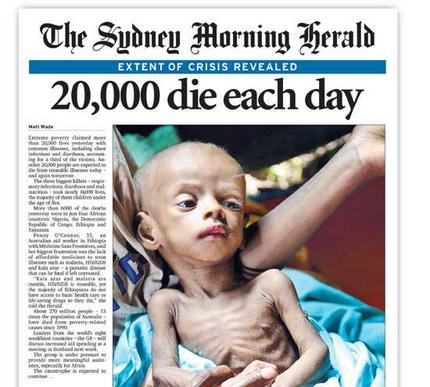

Image Source

The boy in the picture is symbolic of a scourge that has plagued society from time immemorial. Though Epidemiologists do not conceive it as a disease.  Many have called it just that. Others have used very colourful language to describe this very colourless state. I am one of those who believe that disease is hopelessly inadequate to describe it. A disease is said to be an abnormal condition affecting the body of an organism. This one affects not only the body, it affects the mind and spirit. (but for my lack of definite knowledge of the hereafter I  would have added the soul too! Yes it is that bad) It is a vicious, life sucking, personality distorting, dignity usurping manacle. Yes it is. I am not exaggerating. Neither are the ones who have used even more seemingly disproportionate language like the one inked in this jpg:

Image Source

I truly admire anyone who has had to battle rock bottom abject (debasing, low, vile,-add your own synonym) poverty and made it to the top legitimately without been involved in illicit activities in the process.Thumbs up

If you think that poverty does not deserve all the epithets hauled at it, then chew on this.

In our world today (as we speak) 2.7 billion people live on less than $2 a day. 1.1 billion on less than $1 per day. 18 million of our fellow humans die each year from poverty-related causes. You do the maths. Nearly 3 billion people in a global population of a little over 7 billion fall squarely within the poverty benchmark. If you increase that benchmark a little to include what it takes on the average to live a normal life in this world that does not compromise on human dignity (e.g. three square meals, clothing and shelter) then we could be talking as much as 5 billion people.

The statistics are indeed frightening.

Lest you think poverty is endemic to a particular region. Poverty though prevalent in certain areas certainly has a global spread. Poverty truly transcends national boundaries.

Image Source

Analysts' estimates that some 47 million people in the United States, or 1 in 6, were poor in 2011. With economists like Nouriel Roubini ({affectionately?} dubbed Dr Doom {by who?}) quashing recent hopes of a global growth recovery in the fourth quarter of this year, expect the figures to climb almost everywhere.

How come I am obsessing about poverty today? Well for one it is worth obsessing about. Don’t get me wrong. It is worth obsessing about in that positively minded exhilarating way that seeks solutions, a cure for the malady if you will, in individual, community, national or global ideas and endeavours.

Secondly poverty happens to be central to the theme of today’s post. Poverty is really terrifying. I dare say that poverty is first cousin to death. To be poor is to die in instalments.

Today’s post necessitates the elaborate prefix and focus on poverty. In a jiffy, you would realise just why.

In the previous two posts which you can access here and here, we discussed Seafarer’s rights. Today we would focus on a group that is part of the Maritime industry- onshore workers at the very bottom of the maritime labour chain.  They are for want of a better word “undertakers” of dead ships. They administer the “final rites of passage” to ships. Now is a good time to ask again the question we asked in the beginning of this post. Where do ships go when they die?

It is time to find out.

I remember sitting  and watching a YouTube clip in an International Regulation of Shipping class  taught by Professor Alan TanDirector, NYU School of Law and NUS Dual Degree Program (NYU@NUS) earlier this year.

I still remember the bile I felt that day when the clip was played in class. I must warn you, if you have a heart the clip is quite traumatizing. Viewers discretion is advised as it contains disturbing images towards the end.

Now you know where they go. Surprised? If the job is hazardous and menial you can almost always guess the answer.

They go to graveyards mainly in developing countries. That employ dirt poor ‘undertakers’ who are forced to administer very dangerous ‘ final rites of passage’ as a result of the abject poverty that is their lot. They are forced to literally die (as some of the workers put it) that their family may live. Surely these workers deserve better working conditions at the very least. In conditions worse than modern day slavery, global trade and the quest for unconscionable profit harvests the blood of these ones. Charles Kernaghan the narrator in the clip you just saw describes it as criminal. I totally concur. It is not only criminal. It is harrowing.

Since 2009 when that video was uploaded on YouTube, things have hardly changed. Just last week 16-year-old Khorshed Alam was crushed to death in a Bangladeshi shipbreaking yard at 3:30 am on July 17 when a huge metal plate fell on him. 

It’s the ugly face of shipping that remains at the back burner. But one which we must address and speak out against. It occupies the same ignoble podium as goods produced with child labour, animal cruelty, human trafficking and the like.

It is a tale of poverty, politics ( Yes. Shipping is also very political. Professor Alan Tan brilliantly highlights some of the political issues in Shipping in his book “Vessel-Source Marine Pollution The Law and Politics of International Regulation” ) greed, unscrupulousness, nonchalance, inequality and man’s inhumanity to man. It is our post today.

We have talked about poverty and seen it for what it is- humanity’s common foe irrespective of where you perch on the totem pole. Speaking Singlish with a Singaporean accent I ask what to do lah?I do not have the answers. We all can do something in our very little ways to suppress it though. A penny here. An uplifting word there. The right causes. The right values. Yes the right values! While we are at it how about gluing those pilfering sticky hands to your side and leaving the public till alone? Yeah how about that? Thanks already!

We discussed death. But even death is generally managed in the affairs of man so as to afford dignified decency in the rites of passage for the dead as well as for those left to mourn. Why should shipping be any different?

Now I would be remiss if I left you guys without a parting music video going into the weekend.

This one is from multiple award winning music talent from my home country, 2face Idibia. It’s a song he did in order to raise awareness on the menace of fake and sub-standard food and drug products in Nigeria. He calls it ‘Man Unkind”. It’s thematic preoccupation is man’s inhumanity to man. Ring a bell? Yeah I thought so.

Enjoy your weekend.

Wednesday, July 25, 2012

AN X-RAY OF THE RIGHTS REGIME FOR SEAFARERS. {2 of 2}


Exactly one month ago (25th of June, 2012) was the IMO declared 2nd Annual Day of the Seafarer. Over 1.5million seafarer's contribute immensely to the global economy.

In our last post  yesterday we started out x-raying the rights of the seafarer.

Today we would forge ahead. A quick appetizer first though.


2.0. Major International Legislations providing for the Rights of Seafarers (contd.)

A. ILO based Conventions (contd.)

Fishing is an integral part of ocean (and water bodies)  related activities. According to a Policy brief of the FAO for the UNFCCC COP-15 in Copenhagen, December 2009 titled 'Fisheries and Aquaculture in our Changing Climate', the total number of commercial fishermen and fish farmers is estimated to be 38 million. Fisheries and aquaculture provide direct and indirect employment to over 500 million people.

Fishing is also very dangerous. According to the Centres for Disease Control and Prevention. During 2000-2006, commercial fishing was one of the most dangerous occupations in the United States, with an average annual fatality rate of 115 deaths per 100,000 fishermen.

It stands to reason, after all this delicacy can sometimes come larger than a man.

Image Source

Fishing also generates its own fair share of controversies. Elsewhere (in Scribd to be precise) I wrote a piece titled 'Policy Bewilderment as a Recipe for Extinction-The IWC and Whaling' that is my two pennies worth view. If you are interested in Whales & Whaling hop right in.

Fishermen are seafarers too. (That is stating the obvious. Fishes aren't caught on land!) So they are equally entitled to rights.

The ILO Work in Fishing Convention (No.188) (adopted at the 96th International Labour Conference (ILC) of the ILO in 2007.) sets standards to protect workers in fishing. Like the MLC, 2006 the convention is not yet in effect. Ratification by a minimum of 10 ILO member states (including eight coastal nations) is needed to bring it to effect.

The Convention aims to ensure that fishers have decent conditions of work on board fishing vessels with regard to minimum requirements for work on board; conditions of service; accommodation and food; occupational safety and health protection; medical care and social security. It applies to all fishers and fishing vessels engaged in commercial fishing operations and supersedes the old Conventions relating to fishermen.

There are also measures to ensure compliance and enforcement. Large fishing vessels on extended voyages may be inspected in foreign ports to ensure that fishers do not work under conditions that are hazardous to their safety and health.

B. IMO based Conventions

The International Maritime Organisations (IMO) sets international maritime standards through a number of Conventions and guidelines. The three main IMO Conventions are:

  • International Convention for the Safety of Life at Sea (SOLAS) (covers safety at sea)
  • Standards of Training, Certification and Watchkeeping Convention (STCW) (covers training and professional standards for seafarers)
  • International Convention for the Prevention of Pollution from Ships (MARPOL(addresses environmental concerns)

The IMO Conventions are of primary importance to seafarers rights because they have a direct impact on living and working conditions of seafarers.

3.0. National Laws & Seafarer's Rights.

Most Maritime nations have national laws that directly implicate the rights of seafarers. As stated in the last post, a country's national laws on Employment & Labour, Trade & Investment, Contractual relations etc. may have an effect on Seafarer's rights. A privilege conferred on the seafarer which has the force of law can be justly construed as a right.

Since there are myriads of national laws, we would just give an example of where national law have conferred rights on seafarers. One of such laws is the Republic of the Philippines (a major Maritime labour supplier) POEA Rules and Regulations Governing the Recruitment and Employment of Seafarers. The first three opening statements in the Rules are as follows:

"It is the policy of the Administration:

    • To uphold the dignity and fundamental human rights of Filipino seafarers navigating the foreign seas and promote full employment and equality of employment opportunities for all;
    • To protect every Filipino seafarer desiring to work overseas by securing the best possible terms and conditions of employment; and
    • To allow the deployment of Filipino seafarers to countries which have existing labor and social laws or are signatories to international agreements protecting the rights of seafarers..." 

Similar laws of other nations exist and for the scholarly geeks and researchers amongst the readership of this blog you can take an ecstatic nerdy trip to NATLEX, the database of national labour, social security and related human rights legislation maintained by the ILO's International Labour Standards Department.

For the rest of us how about a little infotainment?

Think a career at the seas is not for you? Even for the Navy? Oh common! Think again!

Check out below the fun that is astronavigation. Technology aside, these guys have a crack at the age-old method of navigating by the sun, moon, planets and stars, swapping their GPS for complicated looking tools called "sextants". It's a lesson in navigation for Midshipmen produced by Defence Media Centre production, in partnership with the Republic of Singapore Navy.

If you did not pick anything from the video, you ought to have learnt something from the rope splicing lesson! If you didn't then you need to watch the clip again!Smile with tongue out

4.0. Other mechanisms for Seafarer's rights articulation
There are diverse other mechanisms for the articulation of seafarer's rights.

Some of these mechanisms include Maritime and Labour organization efforts, Trade Unions etc.

The more popular ones are the International Transport Workers Federation (ITF) and Seafarers’ Rights International (SRI). The International Transport Workers' Federation (ITF) is an international trade union federation of transport workers' unions. Any independent trade union with members in the transport industry is eligible for membership of the ITF. 690 unions representing over 4.5 million transport workers in 153 countries are members of the ITF. It is one of several Global Federation Unions allied with the International Trade Union Confederation (ITUC).

One of the aims of the ITF as set out in its Constitution is to promote respect for trade union and human rights worldwide.

The Seafarers’ Rights International is a unique and independent centre dedicated to advancing seafarers’ interests through research, education and training in the law concerning seafarers.

In addition the major international bodies x-rayed earlier like the IMO periodically issues circulars and guidelines on various aspects of seafarer's rights. For example the Guidelines on fair treatment of seafarers in the event of a maritime accident, Circular letter No.2711 of 26 June 2006.

5.0 Summary of Seafarer's Rights

Ladies first.

Image Source

The Seafarer's Rights Regime recognizes gender equality in a variety of ways, thus female seafarers:

  • Have the right to equality in job and education; are entitled like male seafarers to minimum wages and working conditions; same working hours with maximum limit being 14 hours in a 24 hour period and pay for overtime work above the stipulated work hours. (These are ILO based Conventions rights. The ILO Subcommittee on Wages of Seafarers of the Joint Maritime Commission meets regularly to fix minimum wages).
  • Cannot be denied any maritime post on a vessel based on her gender and have right to be guaranteed against any form of discrimination for any maritime job, in terms of equipment, working conditions or facilities. (IMO based Conventions rights)
  • Entitled to paid maternity leave rights as in any other profession.
  • Have the right to form or join any trade unions to represent themselves.
  • Right not to be bullied and harassed aboard a vessel. (This an ITF based initiative. For other initiatives on female seafarer's rights, go here)

Now generally speaking a summary of the rights of the ILO based MLC includes:

    • the right to a safe and secure workplace that complies with international safety standards;
    • the right to decent working and living conditions aboard;
    • the right to claim health protection, medical care, welfare measures and other forms of social protection;
    • the right to fair terms of employment;
    • the right to form or join trade unions of his/her choice and to seek help of the union for negotiations of a collective bargaining agreement on his/her behalf;
    • The right not to be charged by a marine agency for purpose of seeking recruitment. Though services in terms of obtaining international documents, national seafarer’s book, medical certificates etc. can be charged for.

There are many other rights and you can go in search of them here as your nerdy spirit leads you.

6.0. Mechanisms for the enforcement of Seafarer's rights.

When a seafarer's rights are infringed what options are open to him?

National laws often present no problem as they generally mean access to national courts. This is even more so when the ship owners are suing on contractual rights subject to national laws.

But we all know that shipping is an international industry. There are a number of bottlenecks here. First a situation where the seafarer is from a different nationality, the ship-owner from a different nationality and the ship registered in a flag of convenience different from both the seafarer and the ship-owner, creates a very interesting legal mix of potential Maritime Conflicts of Law.

Second though the ILO and IMO based conventions often contain a general framework for implementation and enforcement of its provisions, the general weaknesses associated with individuals' personal access to justice based on International Conventions permeates here as well.

Implementation and enforcement of ILO and IMO standards is thus dependent to a large extent on the will of the flag state and this differs (apologies Equity) 'with the Chancellor's foot.'

The situation is made more precarious because both the ILO based MLC of 2006 and the  ILO Work in Fishing Convention (No.188) of 2007 have yet to come into force. So in reality the rights of seafarers still exist in a maze of dense and often overlapping conventions and standards.

All these have a bearing on how easily and quickly the seafarer can access his rights.

For a scholarly exposition of the peculiarities inherent thereto. I recommend the following reads:

  1. "Seafarers' Rights in the Globalized Maritime Industry" by Desislava Nikolaeva Dimitrova, Roger Blanpain 2010 Kluwer Law International BV. The Netherlands. ISBN 978-90-411-3349-6. It is now also available as an e-book and can be purchased here; and
  2. "Seafarers' Rights" Edited by Deirdre Fitzpatrick, Michael Anderson  Oxford University Press, 2005 - Law - 622 pages. ISBN13: 9780199277520ISBN10: 0199277524 Hardback, 690 pages Apr 2005, In Stock. Price:$199.50 (06). Chapter Three dealing with International Compliance and Enforcement Mechanisms for Seafarers' Rights is particularly relevant. You can order it online here.

7.0. Conclusion

Seafarer's rights is one that should rightly occupy our attention. The importance of Seafarers to global trade can hardly be underestimated.

In the face of a global economic onslaught, perhaps more states especially developing Maritime states like Nigeria would see the need for becoming a Maritime labour hub (just like the Philippines, India and a few Eastern European countries) and Hopefully more states would ratify the two major ILO Conventions that have a bearing on seafarer's right to usher in a more streamlined rights regime.

That's it for this post!

High five

Tuesday, July 24, 2012

AN X-RAY OF THE RIGHTS REGIME FOR SEAFARERS. {1 of 2}


“This tale is true, and mine…It tells
Of smashing surf when I sweated in the cold
Of an anxious watch, perched in the bow
As it dashed under cliffs. My feet were cast
In icy bands, bound with frost,
With frozen chains, and hardship groaned
Around my heart. Hunger tore
At my sea-weary soul…”

These immortal lines introduces us to the Seafarer.  Responsible for steering humanity through the tumultuous sea of civilization. He is a lesson in contrasts. One filled with high spirits yet an often desolate figure. Very important to the scheme of things but often trivialized. Brave though sometimes timorous. Rambunctious but often taciturn. Amorous yet often cuckolded. The stuff of legends but very often the villain. 

The seafarer comes in different shades. Generically speaking seagoing men and women are seafarers. Sailors, Naval men, Pirates, Buccaneers & Vikings (these trio an unscrupulous lot with a fascinating but ignoble history), Crewmen etc.

This post and the next however is mainly dedicated to the honest seafarer employed as crew on ships (i.e legitimately flagged ships either in the relevant home registry or in flags of convenience)

The Seafarer poem has been translated many times by numerous scholars, starting with Benjamin Thorpe in 1842 and including Ezra Pound. Between 1842 and the 2000’s over 60 different versions, in eight languages, have been recorded. But the one I love the most is the one whose lines appear in today's post translated by Burton Raffel.

It so vividly captures among other things the predicament and working conditions of the seafarer.

“…No man sheltered
            On the quiet fairness of earth can feel
            How wretched I was, drifting through winter
15        On an ice-cold sea, whirled in sorrow,
            Alone in a world blown clear of love,
            Hung with icicles. The hailstorms flew.
            The only sound was the roaring sea,
            The freezing waves. The song of the swan
20        Might serve for pleasure, the cry of the sea-fowl,
            The death-noise of birds instead of laughter,
            The mewing of gulls instead of mead.
            Storms beat on the rocky cliffs and were echoed
            By icy-feathered terns and the eagle’s screams;
25        No kinsman could offer comfort there,
            To a soul left drowning in desolation…”
 

Surely such a brave soul ought to enjoy the rewards of his endeavours. Yet the seafarer, despite his crucial role in international trade and commerce and the perils of his job, for a long time suffered from a violation of his rights and in many ways still do.

Often his rights are poorly articulated and ignored but his blame quick to be fixed. But this state of affairs ought not to be the case. There do in fact exist a robust body of rights regarding the seafarer.  Our aim in the next two posts is to ferret out these rights. What are the nature of these rights? Where can they be found? What International protections are offered to the Seafarer? What are the legal mechanisms for the vindication of these rights?

Our work is cut out. But first we must set the tone.

Let’s go to concert. The concert version of the Seafarer translation by Raffel was originally written for Rachel Gawell, and onstage she weaves the cello part the poem together. (Note: Rachel has performed the piece on No Signal concerts, at the Kimmel Centre in Philadelphia, and with the Peabody Camerata, which awarded the work its composition prize in 2007. But thanks to YouTube we would join her vicariously in concertOpen-mouthed smile)

If I were you I would  familiarize myself with the entire wordings here. That surely makes for a better concert experience.

What a beautiful rendition! Now that we are properly attuned to the seafarer’s tale, it’s time to get acquainted with his rights.       

1.0. Seafarers Rights: Extent & Sources

The rights of the seafarer straddles different legislations and legal mechanisms both local and international. His (for the records whenever I use ‘his’ or any masculine pronoun or words to reference seafarers in this post and the next I am also referring to female seafarers. The masculine pronouns are used strictly for the sake of convenienceAngry smile) rights also implicates different areas of law like Employment, Labour & Trade Union law; International law; Criminal law; Maritime Law & Admiralty; International Regulation of Shipping, Contracts; and Human Rights law.

The sources of seafarer rights include: the law of the flag state (for e.g a Nigerian seafarer on a Panama flag ship, have rights (and obligations) under the laws of Panama); port state law (Generally a port State does not intervene in the internal affairs of a ship unless there is a dispute which concerns the peace and good order of the port (for example if a crime is committed on board a ship). However in many jurisdictions around the world, if there is a legal claim, for example for unpaid wages, a seafarer will be able to start a legal action in the courts of the port State); home state law (A seafarer may rely on rights contained in his home State law if that law governs his contract of employment. His home country can also provide support and assistance through its consular offices); contract of employment (Individual contract of employment sets out what a seafarer’s rights are between him and others and varies according to peculiar circumstances); and international law (Human rights instruments exist at international and regional level which may be relevant to the rights of seafarers.)

2.0. Major International legislations providing for the rights of seafarers. 

A. ILO Based Conventions.

The International Labour Organisation (ILO) has set international labour standards for seafarers (they being workers as well) in 68 Conventions and Recommendations. These instruments, taken together, constitute a comprehensive set of standards and concern practically all aspects of living and working conditions of seafarers. 

The standards though comprehensive is admittedly very unwieldy and confusing. These concerns probably led to the adoption of the Maritime Labour Convention 2006 during the 94th Session of the ILO on February 23, 2006, with a view to consolidating previous standards in a single, coherent form. 

The Maritime Labour Convention 2006 though not yet in force would soon become operational as only two ratifications are needed to hit the magic number 30 (the conditions are 30 ratifications; representing 33% of gross tonnage of ships. The tonnage requirement had long been met) needed for the convention to come into force.

The convention changes 37 ILO conventions, which means that these conventions upon entry into force of the MLC will close for ratification (if not already closed) and that entry into force for a specific country means automatic denouncement of its ratification to other conventions (if it has not already denounced them). You can find a list of the 37 ILO Conventions affected here.

The Convention applies to all ships (and the seafarers on that ship), whether publicly or privately owned, ordinarily engaged in commercial activities.  It defines a seafarer as any person who is employed or engaged or works in any capacity on board a ship.  The Convention does not apply to ships engaged in fishing or in similar pursuits; ships which navigate exclusively in inland waters or waters within, or closely adjacent to, sheltered waters or areas where port regulations apply; and ships of traditional build such as dhows and junks. The Convention does not apply to warships or naval auxiliaries. [Article II, paragraph 4].

For a detailed look at the workings of the convention, the  American Bureau of Shipping Guidance Notes on The ILO Maritime Labour Convention, 2006 is an excellent resource.

Suffice it to say however that the Convention is big on Employment & Labour rights (it provides for an employment agreement, guaranteeing decent on-board working and living conditions, to be signed by both the seafarer and the ship-owner, or a representative of the ship-owner. Monthly pay, in full and in accordance with the employment agreement and any applicable collective agreement. 14-hour work limit in any 24-hour period, 72 hours in any seven-day period); It also contains rights akin to the right of the dignity of the human person (There are specific requirements for living accommodation and recreational facilities – including minimum room sizes, and satisfactory heating, ventilation, sanitary facilities, lighting and hospital accommodation, and access to prompt medical care when on board and in port).

Ships will need to comply with the Convention through holding a Maritime Labour Certificate and Declaration of Maritime Labour Compliance issued by the flag state, which must be available on board for any port state inspection.

The ship-owner must pay to repatriate a seafarer in case of illness, injury, shipwreck, insolvency, sale of ship and so on. I emphasized the word ‘must’ deliberately. This is a very important provision and it is one which goes a long way in protecting the rights of seafarers. It would amaze you to know that ship-owners too can be guilty of abandoning ship! They simply leave the crew to their fate out there on the high seas with dwindling supplies. This sorry state of affairs “…is often a calculated economic decision by a ship owner facing bankruptcy, insolvency or the arrest of its vessel by creditors. In many cases, vessels are abandoned after they are detained by port state control inspectors as unseaworthy. The global economic downturn has hit some operators hard, but it is often the crews who come off worst…”

Now a break ‘plusssse!’

It’s an anathema to get bored on this blog so I would let you off with these guttural lyrics from Gallows in the metal musical genre (Yeah I do listen to metal too. I’m eclectic remember?) song titled ??? You guessed right- ‘Abandon Ship!’

Don’t you just love the last verse:

“Ladies and Gentlemen
May I have your attention please
This is the captain of your ship
I'm sorry we depart this way
You (substitute ship-owner) left me broken hearted
But I never loved you anyway”
 

There is really nothing to love about a ship-owner who abandons his ship and the crew to their fate!

Stay tuned for the concluding part.

See ya Be right back.

Friday, July 20, 2012

TELEROBOTICS: PROSPECTS FOR TRANSPORTATION & LOGISTICS; LEGAL ISSUES & CHALLENGES {2 OF 2}

We started talking Telerobotics chiefly within a transportation context in the last post. You can quickly get up to speed here. It is highly recommended you do, to get the drift of today’s conversation and to aid better understanding of the abbreviations used herein.

Now shall we proceed?

A. Legal issues posed by Telerobotics

Let your imaginations run wild for a moment.

Image Source

What possible Legal issues do advancements in Telerobotics present?

1. UGVs

Imagine commercial UGVs maybe less than half a century from now in our highways and roads similar to what we have today. Let’s say there is an accident involving two or more UGVs how would liability attach and be apportioned?

Now remember that we are talking unmanned vehicle’s here. This means theoretically that at the time of impact  liability cannot be said to have attached to any person. The vehicle may admittedly be controlled remotely by a person in which case a lifting of the veil may well reveal the person (the directing mind and will if you like) to be slammed with liability. But surely one would expect that further advancements in technology may result in a situation where there is no discoverable biological directing mind and will for blame to attach. After all, what stands in the way of technology unfurling to the extent that an inbuilt preprogramed sensor or chip in the UGV is the sole directing mind and will as against a scenario where a biological person controls the UGV remotely? What happens in such cases?

Even if precision engineering entails a situation where UGVs negotiate heavy traffic without ramming into each other, how about collisions with humans? How are the rules for seeking redress following an accident affected? What law enforcement challenges are posed by an absentee directing mind and will or a non existent one?

You think I am being unnecessarily esoteric and all these is far in the future right? Think again!

I’ll aid your thinking. Watch the video below and see my esoteric legal gibberish suddenly adorn the garb of reality.

Now do I have your attention? Good.

Google is promoting this ‘driverless’ or ‘unmanned’ concept which originally is an idea of Sebastian Thrun, the brilliant Google VP and Fellow, and a Research Professor at Stanford University.

The concept of civilian unmanned vehicles has a lot of potentials to change transportation law as we know it. In June 2012, Nevada made history and became the first state in the US to pass legislation that allows “autonomous” cars on it’s roads.

The Assembly Bill No. 511–Committee on Transportation states in its preamble that it is “AN ACT relating to transportation; providing certain privileges to the owner or long-term lessee of a qualified alternative fuel vehicle; authorizing in this State the operation of, and a driver’s license endorsement for operators of, autonomous vehicles; providing a penalty; and providing other matters properly relating thereto”

Imagine how Traffic laws, the laws of Torts, Insurance, Contract and even Transportation Law would forever be redefined as the ‘unmanned’ fever takes hold in road transportation.

2. UAVs

Now to the very controversial one-Drones!

The legal issues and implications here read like a plot from a blockbuster novel or a box office hit movie starring an unusual culprit as aggressor or “boss”- the unmanned area vehicle.


For the blockbuster feel and the insider story of someone who had once been the directing will if not mind of a drone grab Lieutenant Martin’s book here. He’s been there done that.


Drones have given these aerial category of unmanned vehicles a very bad name. At the very least the use of drones have changed international warfare forever. It has also changed International law substantively. The traditional notion of Territorial Sovereignty of a nation over its airspace has been shrugged aside with casual if not petulant disdain by the US as it wages its war on terror. Unilateral strikes and action a favourite policy of the US has and continue to deal mortal blows on Multilateralism.

Recently Christof Heyns, the UN special rapporteur on extrajudicial killings, summary or arbitrary executions, told a conference in Geneva that President Obama's attacks in Pakistan, Yemen and elsewhere, carried out by the CIA, would encourage other states to flout long-established human rights standards.

In his strongest critique so far of drone strikes, Heyns suggested some may even constitute "war crimes". His comments come amid rising international unease over the surge in killings by remotely piloted UAVs.

The US has defended drone attacks as self-defence against al-Qaida and has refused to allow judicial scrutiny of the UAV programme.

Drone strikes remain controversial even within the U.S. The US Attorney General and other high ranking officials of the Obama Administration continues to grapple with the knotty conundrum of a shady if not dubious legal authority or justification for the use of drone strikes.

According to Obama’s counterterrorism chief, John Brennan, the legal authority for the drone strikes derives from the Authorization for Use of Military Force (AUMF) passed by the Congress in September 2001 to authorize the attack on Afghanistan. He notes that there is "nothing in the AUMF that restricts the use of military force against al-Qaida to Afghanistan".

Assuming that Brennan’s long shot argument is tenable (I seriously have my doubts) does it justify the targeted killing of an American citizen, in a country with which the United States was not at war, in secret and without the benefit of a trial? Surely this stands the very essence of democracy on its head.

Whatever happened to the Due Process Clause of the Constitution and all the other elaborate safeguards of democracy?

The Justice Department’s Office of Legal Counsel prepared a lengthy memo justifying the extraordinary step of the killing of Mr Awlaki in September 2011, (along with a fellow propagandist, Samir Khan, an American citizen who was not on the target list but was traveling with him) asserting that while the Fifth Amendment’s guarantee of due process applied, it could be satisfied by internal deliberations in the executive branch.

One of the latest UAV developments that concerns human rights groups is the way in which attacks, they allege, have moved towards targeting groups based on perceived patterns of behaviour that look suspicious from aerial surveillance, rather than relying on intelligence about specific al-Qaida activists.

Drone protest

We all know that there is cause to entertain genuine fears on that line of thinking. What if the perception is wrong? That something looks suspicious is not proof that it is actually suspicious and in any event how can we guarantee the objectivity of suspicion in the face of stereotypes and racial profiling?

When a drone attack kills innocent citizens of a country who happen to be in the wrong place at the wrong time can the families of the deceased seek legal redress? The USA is not a signatory to the International Criminal Court (ICC) or many other international legal forums where legal action might be brought. It is, however, part of the International Court of Justice (ICJ) where cases can be initiated by one state against another. It remains to be seen if a state can muster the necessary political will to seek justice on behalf of her innocent citizens murdered in a drone attack.

Away from the maddening crowd of military drone attacks, what legal issues permeate the use of commercial drones?

With the US preparing to open its skies to a new fleet of commercial drones, on course to be permitted by 2015 this question is both relevant and germane.

Experts predict dozens of tasks will be carried out by autonomous drones, from dusting crops and washing skyscraper windows, to shadowing celebrities to paparazzi photo shots, to espionage and counter espionage, to law enforcements especially in enforcement of traffic laws, drug cartels monitoring and even crime prevention.

What legal issues do commercial drones implicate?

Think for starters re-writing of privacy laws. Commercial Drones represent a stunning constriction of our private space and not just in the impersonal way that the internet has ensured but in a more physically obtrusive way.

Think Terrorism and Hijack. The wrong drone in the wrong hands. OMG!Crying face

Think Collisions and Crashes. Drone going downAirplane

All these present enormous legal challenges.

3. ROVs

By now we are pretty much attuned to imagining the possible legal issues when we talk ‘unmanned’. All we need do here is apply our imagination and adapt it to the terrain in question. ROVs rule the oceans and seas.

The legal implications of having no one on-board a ship is a stuff for legends and myths.

Ever heard of the story of the Mary Celeste or the Ghost Ship as it is infamously called? It was an American brigantine merchant ship famous for having been discovered on 4 December 1872 in the Atlantic Ocean, unmanned and apparently abandoned.

“The fate of her crew has been the subject of much speculation. Theories range from alcoholic fumes, to underwater earthquakes, to waterspouts, to paranormal explanations involving extra-terrestrial life, unidentified flying objects (UFOs), sea monsters, and the phenomenon of the Bermuda Triangle, although the Mary Celeste is not known to have sailed through the Bermuda Triangle area. The Mary Celeste is…the archetypal ghost ship, since she was discovered derelict without any apparent explanation, and her name has become a synonym for similar occurrences.”

Unlike ghost ships, for ROVs or unmanned vehicles that ply water bodies we do not need to fret about the fate of the crew as there is no crew (at least in the traditional sense) in the first place. But all the other legal worries that apply to UGVs and UAVs mostly apply mutatis mutandi to ROVs as well.

Unmanned ships have monumental implications for Maritime and Admiralty law.

Imagine the implication for piracy if you have unmanned vessels with defensive mechanisms on board to thwart unauthorized boarding.

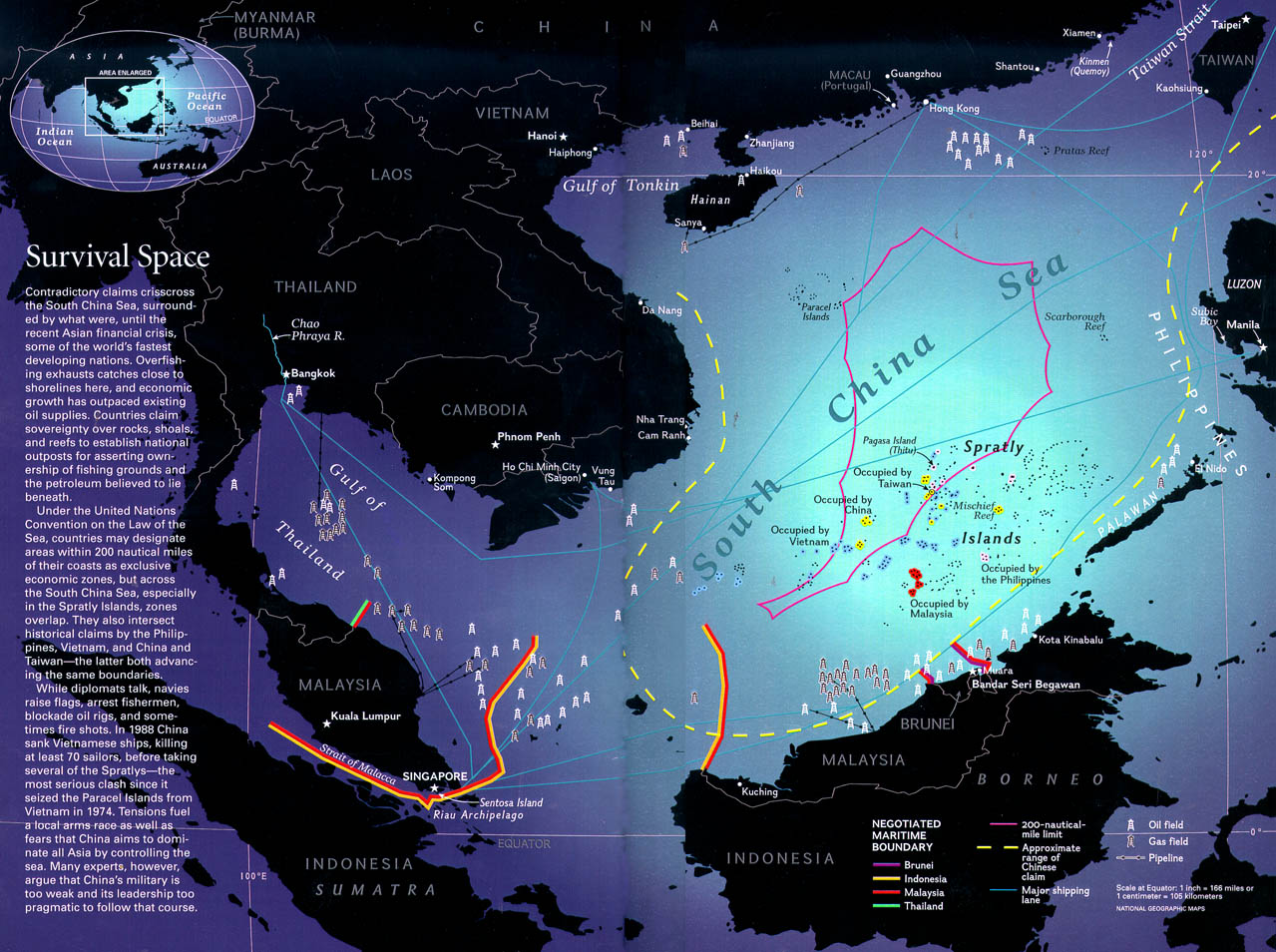
Imagine the effect on global trade and shipping; the redundancy it would create among seafarers; the rewriting of all the major Maritime safety conventions, those relating to prevention of marine pollution and those covering liability and compensation like  SOLAS, MARPOL, STCW, COLREG, SUA, OPRC-HNS Protocol, SALVAGE to mention a few; the possibility for underwater espionage and attacks by tech savvy nations and its implications for maritime boundary disputes like that of the South China sea.

B.Challenges posed by Telerobotics

Truth is there are many challenges posed by Telerobotics. Some of the challenges are generic to technological innovation whereas others are peculiar to Telerobotics. We would consider just a few.

1. Technological deficits.
By Technological deficits I mean gaps or vulnerabilities in the system that can be exploited to wreak havoc with disastrous legal consequences.

Technology most invariably do come with certain vulnerabilities. Think computers. Think viruses. Think the internet. Think rogue routers. 

Iranian engineers have identified GPS navigation as the "weakest point" of the US's UAV drone arsenal and rightly so too! 

US researchers recently created a $US1000 ($993) device that is capable of hijacking an unmanned drone. This naturally raises one’s hairs when it is realized that unmanned aircraft could be turned into terrorist weapons.

Enter video caption here

“The hijacking device, called a "GPS spoofer", was created by a team led by Todd Humphreys, a radio navigation specialist at the University of Texas, in Austin. Professor Humphreys has demonstrated that his spoofer can be used to take over civilian drones, which navigate using an open network of GPS satellites that have little security. It works by infiltrating the GPS technology that drones rely on for navigation and can be used to pull a drone off course or to crash it deliberately. Now imagine the capacity for mischief much like hackers already display with the internet and computers.”

Same thing applies to UAVs and UGVs.

2. The duality of Technology

Sequel to the first challenge is technology’s Jekyll and Hyde tendencies. Technology is capable of great good and also devastating evil. Picture Nuclear energy used to generate power. Then recoil at the horrors of Hiroshima.

What is to stop unmanned systems in the wrong hands been used as an instrument of terror? Nothing really.

3. Technology’s ascent & law’s disconnect.

The arms of the law is often times notoriously short even if it brags to the contrary. As the ship of technological innovations in the field of Telerobotics continues to drift rudderless into unchartered territories, the paddle of the law is left dangling archaically, hopelessly inept to provide the needed direction.

The law is simply not doing enough to keep pace with technological innovations and the changing rules of engagement. Take for example UAVs (drones precisely) which has as one commentator puts it “become a provocative symbol of American power, running roughshod over national sovereignty and killing innocents. With China, Russia, (North Korea and others) watching, the United States has set an international precedent for sending drones over borders to kill enemies.”

Has international law evolved to meet these unsavoury realities? Not quite.

4. A new world order?

Is Telerobotics going to usher in the long awaited Artificial Intelligence era with this epoch becoming the subject of wistful raconteurs? Are we going to have a new world order where man would reach the apogee of passivity as robots take over most spheres of active endeavour? What are the implications for the world economy in terms of redundancy of the workforce? Are these implications necessarily progressive?

How about the social implications? What would be considered socially acceptable in a Telerobotics world? What of the effect on the human psyche? Would we suffer dejection from knowledge that our unmanned machines are capable of so much more on their own than we ever will be able to accomplish accompanying them? Are we going to develop some sort of psychosis, perversions, insecurities etc.?

Image Source
The permutations are endless.

You can make up infinite scenarios. Suffice it to say that Telerobotics does indeed present very intriguing possibilities.

Enjoy your weekend!