...of the seas; it's anthropomorphic waves of civilization and progress; the folly of men; the fascination of the deep; the mystery of its reach and the unwavering gaze of the law.
In a previous post, I did try to make a case for uniformity in emissions regulations as regards ships and aviation emissions.
I and a lot of industry followers were particularly upbeat about the chances of a working foundation towards uniformity due to the opportunity presented by COP 17.
On the 2nd day of COP17, Oxfam launched their 'A Fair Deal on Bunkers' campaign which aimed to highlight the rising effect of shipping emissions and how they must be tackled to keep warming below 2 degrees. See video below.
'The United Nations Climate Change Conference, Durban 2011, delivered a breakthrough on the international community's response to climate change. In the second largest meeting of its kind, the negotiations advanced, in a balanced fashion, the implementation of the Convention and the Kyoto Protocol, the Bali Action Plan, and the Cancun Agreements. The outcomes included a decision by Parties to adopt a universal legal agreement on climate change as soon as possible, and no later than 2015.
The President of COP17/CMP7 Maite Nkoana-Mashabane said: "What we have achieved in Durban will play a central role in saving tomorrow, today."'
But beyond the exhilarating tone of Mashabane's assertion and the obvious progress made in the general climate change control quest, no agreement was reached on how to deal with carbon dioxide emissions from aviation and shipping at the Durban forum.
During the pendency of the conference on November 29th, 2011 Oxfam, WWF and the International Chamber of Shipping had issued a joint statement in respect of shipping emissions calling on delegates to COP 17 to give the International Maritime Organization (IMO) clear guidance on continuing its work on reducing shipping emissions through the development of Market Based Measures (MBMs).
The organisations maintained (just as I did in my shipping emissions blog post earlier referred to) 'that an effective regulatory framework for curbing emission of CO2 from international shipping must be global in nature and designed so as to reduce the possibility of ‘carbon leakage’, while taking full account of the best interests of developing countries and the UNFCCC principle of ‘common but differentiated responsibilities and respective capabilities’ (CBDR).'
They went on to posit that 'with respect to any carbon charges that might be proposed by governments, they agree that the recent IMO agreement on technical and operational measures (Mandatory amendments to MARPOL Annex VI regulating atmospheric pollution, adopted by the IMO Marine Environment Protection Committee in July 2011, that will be enter into force in January 2013) to reduce shipping emissions demonstrates that the IMO is eminently capable of developing a further international agreement for shipping on MBMs.'
They further stated that 'in the light of the urgency required to avoid catastrophic climate change...governments should take all steps necessary to expedite such an agreement at the IMO.'
These calls fell on deaf ears.
Instead in the final text issued at the end of COP17, the unsatisfactory and tersely worded statement that emanated was that parties have agreed to continue “consideration of issues related to addressing emissions from international aviation and maritime transport.”
This rather tepid and ambiguous statement embodies yet again a squandered opportunity towards global uniformity in shipping and aviation emissions control.
Air Transport Action Group (ATAG) Executive Director Paul Steele (ATW Daily News, May 16), who also serves as IATA's top official on environmental issues, said that “while it seems as if significant progress has been made in the broader climate agreement, with an extension to the Kyoto Protocol and a roadmap for a future legally binding agreement, there was yet again no progress at the UNFCCC on getting a global sectoral approach for aviation emissions.”
He added, “Positively for the industry there is agreement amongst nearly all countries that ICAO is the most appropriate place to deal with aviation emissions. The industry will continue to engage with ICAO to ensure that an ambitious work program can deliver an outcome on aviation emissions by the next ICAO Assembly in 2013. The tough nature of the negotiations under UNFCCC really places pressure on those same governments to deliver something meaningful at ICAO. ”
So for both shipping and aviation emissions control, uniformity sadly still remains a dream.
In the meantime the global shipping and aviation emissions stream continues to elongate in a milieu of disparate and fragmented regulation
I am back this week after a two week hiatus to talk about sinking ships. My apologies for the delay in posting. I had to keep up with other engagements that pay the bills.
Hmmnn sinking ships. A little depressing for this yuletide season you had say. You are perfectly justified if you think it is.
Well I don't mean to distress you. Just to share my thoughts on sinking ships and yes sinking lives.
First sinking ships.
Ships have sunk from time immemorial. I am sure we all know of the most famous example of a sinking ship-The Titanic. Other equally famous ones include the Britannic, Lusitania or Estonia. The ill-fated White Star liner RMS Titanic, struck an iceberg and sank on her maiden voyage across the Atlantic. Below is the Titanic resting 'at the bottom of the North Atlantic Ocean, broken in half down the middle and surrounded by debris, slowly disintegrating in the ice-cold depths.'
Within the space of two weeks since my last blog post, a Chinese cargo ship sunk off Northern Philippines. The crew abandoned ship (ABS) as the cargo laden ship started sinking in shallow waters after being lashed by huge waves. One crew man is feared dead and another missing.
Though there are no clear cut statistics on the number of sea going vessels that sink on the average per annum globally, Wolfgang Rosenthal, of the GKSS Research Centre in Geesthacht, Germany opined in 2004 that two large ships sink every week.
The United Nations estimates that there are more than 3 million shipwrecks on the ocean floor. This has given rise to fortune hunts of buried sea vessels holding troves of treasures. One of such hunts and it's ongoing aftermath can be read here.The SS Gairsoppa recovery is a planned deep-sea operation in the North Atlantic Ocean, that is expected to retrieve the world's largest precious metals shipwreck salvage in history. Here is a you tube video heralding the find.
You can read about the treasure expedition of the SS Gairsoppa here.
When a ship sinks the stakes could be high, apart from possible loss of lives, economic and even environmental interests play a part. The environment is often the worse off when liquid contents carried by ships sip into the marine ecosystem. Valuables and even the rescue of the ship itself spurns an entire branch of Maritime Law called The Law of Salvage.
Ships sink for a variety of reasons. Wars (like the SS Gairsoppa), bad weather, fire, poor design, improperly stowed cargo, navigation and other human errors leading to collisions (with another ship, the shoreline, an iceberg, etc.), forming an artificial reef, piracy, mutiny or sabotage; as part of target practice; or to remove a menace to navigation.
'There's an old maritime tale that rats will abandon a sinking ship. There have been many reports of rats jumping from a ship by the dozen before the crew is even aware that there's a problem. So do rats have ESP? Probably not. The cause for this phenomenon is pretty simple. If there are rats on board a ship, they're most likely living in the bilge area -- just like they might be found in your basement. Since the bilge is the first place to take on water, the rats will know about it before anyone else. Water comes in and the rats climb up. Once up top, they probably simply get scared by the activity and jump overboard. A short time later, the crew is aware that the ship is sinking, and dimwitted sailors believe that rats can see the future.'
With the right steps and knowledge, anyone may survive a sinking ship. To learn how to survive a sinking ship click here.
Now to sinking lives.
Sink:
1. To descend to the bottom; submerge.
2.
a. To fall or drop to a lower level, especially to go down slowly or in stages.
b. To subside or settle gradually, as a massive or weighty structure.
3. To appear to move downward, as the sun or moon in setting.
4. To slope downward; incline.
5. To pass into a specified condition.
6.
a. To deteriorate in quality or condition.
b. To diminish, as in value.
7. To become weaker, quieter, or less forceful.
8.
a. To drop or fall slowly, as from weakness or fatigue.
b. To feel great disappointment or discouragement.
9. To seep or soak; penetrate.
10. To make an impression; become felt or understood:
All of the variant's of the word 'sink' save for perhaps 4, 5,9 and 10 are mostly negative in connotation.
By sinking lives here, I mean it in the senses used in 1-3 and 6-8 particularly in the sense of 1 and 6.
Sometimes people find themselves in a descent to the bottom. Many external or internal stimulus may be responsible for this. A failed marriage. A costly mistake. An error in judgement. A hidden affliction. An emotional trauma. A psychological tumult. A determined enemy. A lack of self restraint. An uncontrollable addiction. Many other factors.
These people are all around us. They are that stranger at the bus stop, the colleague at the office, the friend at school, the relative we know. They are all around us.
Some have lost the will to live. Some have reached rock bottom.
It doesn't matter what the causes are. These lives are shipwrecked. Expectations dashed by the harsh reality of terrestrial existence. Like sunken ships, some of these lives have enormous treasures within their being.
These lives are looking for just a reason to live. To carry on. To rise. To be salvaged.
Be that reason.
Spread some love this yuletide. A smile. An endearing word. Encouragement. Care. Empathy. Affection. It doesn't matter your race, beliefs, religion, orientation, preferences.
We share a common humanity. A commonality of birth and death.
Aliens. 1986 science fiction action film directed by James Cameron and starring Sigourney Weaver, Carrie Henn, Michael Biehn, Lance Henriksen, William Hope, and Bill Paxton. I remember watching this movie in 1990 as a boy. I found the action scenes exciting. The alien scenes were out rightly scary. Here is the trailer from the movie.
Aliens fascinate us. Endlessly so. It may be a normal reaction to something we perceive to be different or fear or plain curiosity. Whatever is the reason we are fascinated by Aliens.
Aliens.
Alien (law), a non-citizen inhabitant of a country.
Any introduced species, a species living outside its native distributional range.
In the many senses in which the word is used, we are all aliens outside our natural habitats.
The law always striving to regulate human conduct comes to terms with the word 'Alien' mainly in the regulation of non citizens (though not necessarily as Extraterrestrials.) In the US Civil Procedure there exists Alienage Jurisdiction under 28 USC 1332(a)(2)-(3). There is also a copious reference to Aliens in the immigration laws of many sovereign states. In the US for example there is a 1798 Alien Enemies Act (An act regarding alien enemies) (Not sure if this law is still extant though.)
Regulations involving Alien in the introduced species sense also features in Natural Resources Law. For example the Wildlife Act’s Controlled Alien Species Regulation of British Columbia Canada controls the possession, breeding, shipping and releasing of alien animals (i.e. that are not native to B.C.) that pose a risk to the health or safety of people.
But the sense in which it stokes our eternal fancy is-Aliens as 'Extraterrestrials.'
A little less than a year ago NASA confirmed that Aliens are amongst us as the video below shows.
Yet people still doubt. I know because I am one of the doubting Thomas(es).
Even in 2011, mass sightings have been alleged.
What is it that stokes our enduring fascination with Aliens? Proof of extraterrestrial life? Surely it must be this. Humanity even within the corridors of science believes in an afterlife. But that form of life is a condition subsequent to death. The fascination with Aliens stems from a need or at least a curiosity to confirm if there is contemporaneous existence at this point in time of a concurrently occurring life form operating within the realm of intelligence attributable to man or even higher.
Do they exist? You be the judge. I have my doubts.
But if they do exist then it really is a BIG DEAL.
They could (possibly, in fact most definitely) change the way human civilization unfurls.
Think about it.
For one lawyers of my ilk has to start doing some futuristic thinking of how to regulate Alien (extraterrestrials) conduct. Their existence will raise many pertinent posers. For instance how should immigration laws react to them? Should they be allowed to buy a ticket and board a plane and sit in economy class? Should they be allowed to go on cruises? To trade? To love? To date? To reproduce their kind and (unkind in the case of cross dating)? Will denying them the protection of the law result in a breach of their 'Alien' rights? (some refer to human-like aliens as humanoids. Humanoid rights. Alien rights. The nomenclature matters little.) Should we wage war against them or embrace them? What role would religion play in all this?
The list is endless. You can spin the scenarios as you flow with the thought.
So why am I all gung ho on Aliens? Thought this blog was an aviation and shipping or sea related blog?
Anyway don't fret too much. I may be sounding like someone with a high fever. But here is what started my thoughts off in a tangent. Yeah you guessed right it has to do with the sea.
It's this video below about Aliens of the sea.
Some of the creatures look scary. But unlike the extraterrestrials that I still doubt exists, these ones actually do exist.
If you doubt it, you can (subject to my disclaimer stated herewith that I did not send you on that errand) take a dive to the depth of the sea. They live there.
Or you could just take my word for it and enjoy the vid!
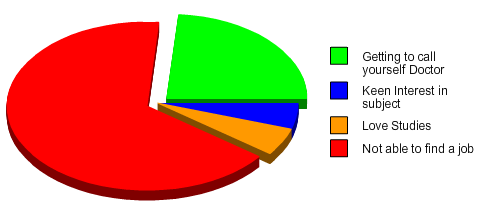
Recently I have been toying with the idea of a PhD. Not for teaching purposes though. The teacher's reward as the cliche goes is in heaven. Do I want to necessarily wait that long for my reward? My mum is a teacher and she's done all the teaching we need in the family. I don't think I necessarily want to teach. Don't get me wrong. I think teaching is an excellent career if you have the knack for it. In my profession teaching may mean liberty to stay in the center of your expertise minus the devilish long hours that you have to put in in say working in a law firm. Though it sometimes is a thankless job and your student's may poke fun at you. But then no aspect of work life is entirely immune from the tendency to lend one's self to caricature.
But what really is in a PHD? A Doctoral place usually means membership of the high echelons of that significant yet intangible corpus of knowledge base that has driven humanity’s progress through the ages. In my view the beauty of the University system lies in the opportunity it presents for ordinary persons to do an extraordinary thing-that of advancing the frontiers of knowledge.
Since the common denominator of such learning is to advance the frontiers of knowledge, it stands to reason that a PhD is amenable to other areas of endeavor as well including the not so altruistic area of business.
In the light of the dreary academic work that may ensue, why would anyone want to do a PhD?
I remember being asked a sub question as regards the trade law implications of a measure like the EU ETS being extended to airlines effective January 2012, in my World Trade Law Exams at the National University of Singapore. The exam was an exam to remember in itself as it was a 4 day long take home Exam that saw me glued to my sit most of the time! It was the longest Exam I have written to date. The fact that I had two other twenty four hour Exams and one four hour Exam all within the space of one week made it the most stressful academic week I have experienced thus far. All towards a double LLM Degree in Global Business Law (New York University) and Maritime Law (National University of Singapore), the first of which would be obtained in February, 2012.
That I should thus be toying with this idea so soon after this harrowing experience may be a pointer to a deeper seated academic masochism that I never knew I was afflicted with prior to this time!
Anyway like I said I am just toying with the idea. The lure of instant immediate 'lucre' may yet prove to be a greater motivation! Spending another two to three years in a pursuit of what some people has mischievously described as a 'Permanent Head Damage', may not really be worth the squeeze.
Yet the thought of a PhD remains alluring.
So if I were to do a PhD what would be my research interest? What area of the law is bound to hold my attention for a minimum of two years without me getting bored?
Without a doubt it will be Maritime and Aviation and all the entangled webs that come with it!
This brings me to the issue I promised to discuss in the last blog post. Emissions Control in the context of Shipping and Aviation.
We will start with International Shipping.
To wet our appetite, let's watch the trio of Mark Major, Policy Officer, International Carbon Market, European Commission; Alfonis Guinier , Secretary General European Community Shipowner's Association; and Per Kageson Professor in Environmental Systems Analysis, Center for Transport Studies talk about how to reduce emissions from International Shipping.
Now that we have put things in context, allow me to don borrowed 'professorial robes' and adumbrate my basic musings on this issue (Hope I am sounding professorial enough?)
Emissions’ control is an emergent issue that is set to shape the future of the Shipping industry. Of particular interest to me is the nexus between Emissions Control and Economic Interests in the context of International Trade. Some of the key considerations would be the effect of existing and emergent International Ship Emissions Regulations on Shipping Finance, International Trade and the desirability or otherwise of Global Regulatory Uniformity in Emissions control.
A pertinent question in the drafting of environmental legislation has always been that of sustainability. Sustainability issues permeate every facet of our existence including regulation. In the light of the recent global economic woes however it is no longer enough for Regulations to be environmentally sustainable. Regulations must endeavour to strike the right balance between sustainability and legitimate economic interests.
In the policy realm there have been a recent slew of measures for reduction of shipping emissions. Such measures take the form of cap-and-trade programs; emissions taxation; emissions standards; low-emissions strategy including R & D efforts into more efficient technologies etc.
But how far has shipping emission regulations sought congruence with Shipping Finance, Global Logistics and Trade? How about the trade implications of such measures? The Shipping industry is an integral part of global trade via its crucial role in International Trade and the global supply chain logistics. It is thus conceivable that any policy that is not in sync with the fundamental parameters that drive the industry is bound to have multiplier effects on the global economy.
There is a current impasse on the underlying international policy to be adopted to craft a global regulation for shipping emission reduction in view of the two conflicting viewpoints- The “Common But Differentiated Responsibility” (CBDR) principle under the UNFCCC which has the support of mainly developing countries and the IMO’s position as canvassed by the International Maritime Organization Secretary General, Mr Efthimios E. Mitropoulos of equality of treatment devoid of blame apportionment.
Although there has been recent progress post Cancun that a fair global deal harmonizing this opposing views could emerge, there is still a considerable risk of having a multiple regulatory regime in the form of regional interventions like the extension of the EU Emissions Trading System to Shipping.
Recital 3 of Directive 2009/29/EC (which implements Phase III of the EU’s Emissions Trading Scheme) provides that:
“In the event that no international agreement which includes international maritime emissions in its reduction targets through the International Maritime Organisation has been approved by the Member States or no such agreement through the UNFCCC has been approved by the Community by 31 December 2011, the Commission should make a proposal to include international maritime emissions according to harmonised modalities in the Community reduction commitment, with the aim of the proposed act entering into force by 2013.”
Giving the myriad of issues including climate change mitigation; the absence of an Emissions assignment mechanism regarding transnational voyage to an individual country due to flexibility in flag state rules; the funding of the Global Climate Fund and needs based apportionment of funds to affected developing countries, trade issues may have not been given adequate consideration.
In an age of economic uncertainty characterized by a global decline in shipping volumes, regulations ought to take into cognisance trade interests even as it seeks to attain a noble environmental aim.
Global Emissions Regulations and Regional measures like the Emissions Trading Scheme (ETS) of the EU implicate some Trade Agreements under the WTO system like the GATT Articles I and III: 4 essentially dealing with the prohibition of horizontal discrimination and the outlawing of measures that may afford protection to like domestic products and the Agreement on Technical Barriers to Trade under the WTO as a possible breach of MFN principle.
ETS being a technical measure may entail mandatory compliance when it is eventually extended to shipping. As a measure to mitigate and adapt to climate change it impacts on trade as it is likely to modify conditions of competition.
ETS derives from commitments to Multilateral Environmental Agreement’s (MEA’s) like the Kyoto Protocol (KP). The rules of the WTO and the MEA’s converge at some point. Article 3.5 UNFCCC and Article 2.3 KP stipulates that measures taken to combat climate change should not constitute a means of arbitrary or unjustifiable discrimination or a disguised restriction on international trade; should be implemented so as to minimize adverse effects on international trade amongst others.
Measures made pursuant to regional schemes like the ETS or even a global agreement has implications for international trade and the shipping industry in terms of a depreciated bottom line due to market access and shipping compliance costs respectively.
Does this hold true for Aviation as well?
This considerations apply mutatis mutandi to Aviation Emissions as well. The hermeneutic considerations have the same jurisprudential' underpinnings. The only differences being that the EU's ETS scheme would apply to airlines flying into the EU from January 1st, 2012 and the ICAO is the body that has the UNFCCC mandate to come up with suitable multilateral regulations for Aviation Emissions Control.
Thus an interdisciplinary research that therefore tries to provide a rational platform for regulations and legislation by expounding the nature of the relationship between emissions control and Shipping or Aviation Finance and International Trade would no doubt provide crucial clarification for future legislations if not out rightly strike the legal balancing chord between sustainability and international trade interests.
The methodology I would adopt if I were to do a PhD in this area would be to examine all the possible trade law implications existing and emergent measures may entail, as well as its impact on shipping finance and international trade through empirical studies and extensive review of the various actions on shipping Emissions with a view to determining not only the linkages but the areas of conflict and to finally distill a possible workable compromise where regulations would not create or result in avoidable distortions to trade.
So that is it! But would I really go ahead down this route or not? Would I seriously consider doing a PhD Doesn't time always tell?
I'll leave you with a poignant discussion of some of the broader issues regarding sustainability, green technologies etc.
By the way where is this Ancestor of the modern DVD, VCD and CD plates? Does anyone still use them? Been sometime I set my eyes on one.
Once upon a time when the gramophone defined an epoch. How time changes yesterday!
By Records I mean- yeah this type:
I did this way back a couple of times when I was much younger and carefree.
Not on a swivel chair though. My method then was to stand and simply turn my whole body around until I feel nauseous and giddy at the same time! I am not so sure if kids do this again.
The current record stands at 36 spins in 30 seconds. Oguzhan Ozdemir from Turkey achieved it on 20 June 2010.
Unfortunately no one at London's Carnaby last during the last Guiness Word Record day on November 17th, 2011 was able to break the record. But they all get a thumbs up for trying! Especially the guy that managed 29 giddy spins. If you wanna reconnect into a childhood that seems lost forever you could go and attempt here. Need I add at your own risk?
Still talking about records, the biggest ever commercial order for the supply of Airplanes in Boeing's history was 'roared' by Indonesia's Lion Air last week.
$21.7 Billion!
That amount up there is the value of the deal brokered by US President Barack Obama.
In case you missed the sign at the beginning of that kingly sum-it's United States Dollars! (I know the US dollars doesn't pull so much punch these days, but damn that's a whole lot of Benji's!)
This is what one billion dollars of cash looks like stacked on 12 palettes.
Now if the deal were to be paid for with cash we would need almost 22 of those, totaling a staggering 264 Palettes if my Maths is correct!
The deal is for the supply of 201 Boeing's updated 737 MAX planes and 29 Next-Generation 737-900 (A total of 230 Airplanes)
Below is the 737 MAX being discussed:
Here is what a simulation of the 737-900 looks like.
The Lion Air order is expected to support more than 110,000 jobs at Boeing and U.S. suppliers. This is another example of the linkages and multiplier effect a viable transport and logistics sector can have on world trade and the global economy.
Our tale won't be complete if we don't pay homage to the seas. There is almost always a parallel in the seas you know and records are broken here as well.
The bragging rights (or at least potential bragging rights) for the record for the highest order of the largest container ships can be claimed by AP Moller-Maersk AS. It's signing of a $1.9 billion contract with South Korea's Daewoo Shipbuilding & Marine Engineering Co Ltd for the building of 10 of the largest-ever cargo-box ships, and the inclusion of rights and options for another 20 ships, which totals about $5.7 billion, makes it poised to wear the crown.
If the rights and options are eventually exercised that would make it the largest order of it's kind on the seas in history!
People in the know say the vessels design would enable it carry a whopping 18,000 containers each!
The carrying capacity of each ship is said to be enough to fill Times Square in New York!
The new 'monsters' to be known as the triple E's would be 400 meters long, 59 meters wide and 73 meters high. At that size it will be the largest ship of any type on the oceans. This is a 16% improvement in size over another of AP Moller-Maersk's ship, the Emma Maersk, the current largest container vessel in operation.
Check out a narrative and a simulation video about the triple E below.
Delivery is scheduled between 2013 and 2015.
The thing I like about the triple E is it's attempt at improvements in Emissions standards. With the EU ETS Emissions trading scheme set to debut in 2012 for Airlines and the hope of a global emmissions control regime for ship emissions (we will talk about this in our next post!) eminent, the move is definitely worth commending.
But for now I'll leave you with a video of the current record holder of the largest mammal, in fact the biggest animal in the whole wide world! The Blue Whale. (If you know of any other, please let me know.) Where else would it reside but the sea?
Pay attention to it's gargantuan statistics in the video and please don't go near it even in your dreams!
Ha ha! Nice having you around. Keep a date with this blog...Bye!
I did promise to tell you about men going Galacticos in my last post the day before yesterday. I said I was gonna do so yesterday but how time flies! Sorry I kept you hanging. So why does the heading of this post read 'the Deep?'. Hang on a sec you will find out soon enough. But first the Heights!
In the past going to space meant being an Astronaut or Cosmonaut in a space programme and the like.
With the conquest of space it was only a matter of time before entrepreneurs ventured forth. And before you jeer that the clientele is limited, Dennis Tito the first man to blast into space paid Russian space chiefs a quite robust $20 million AND Mark Shuttleworth a South African paid a whopping 14 million Pounds Sterling to shuttle to space (living true to his name-'shuttle' 'worth'. Hahaha there I go again with names!)
The commercial entrepreneurs who has ventured into the field includes Space Adventurers and Virgin Galactic amongst others.
Well things have moved pretty fast since then and now just about anybody can go to space.
Did I say anybody can go to space?
Yes anybody so inclined and who's got up to a meagre $200,000 can now book a space to Space (excuse the pun) on Virgin Galactic. 430 spaces of a possible 450 have already been grabbed!
I am sure you are itching to see the extraterrestrial vehicle that will convey them to space.
Well here is what it looks like:
Too technical for you? Ok I'll indulge you with a video.
You are smiling now. Amazing stuff innit?
So pretty soon we should have our first cats or dogs or pigeons or pythons or crocs just about any pet in the long list of pet animals people love to keep in space.
It's space tourism baby! and it's for big boys and girls. The kind I like to roll with.
Well this stuff got me thinking as usual. But before I tell you my thoughts.
Let's pause and ponder...
With so much hunger and disease and spiraling debts owed by nations and individuals alike, and occupy wall street protests, and so much ill plaguing our world, why would anyone want to spend thousands of dollars going into space? That is a possible question on your lips. The questions raises issues of fundamental fairness. But do not throw a pity party. No one said life was fair!
Anyway the reasons are the same with why anyone would want to buy a Rolls Royce Phantom or own a Palace or own an obscenely priced artwork or own an expensive piece of jewelry or clothing. It's about passion. Ego. Bragging Rights. Accomplishment. Fulfillment. Adventure. Insensitivity. The motive is endless and in my opinion may even be irrelevant in this context.
While it may validly be argued that Commercial space tourism serves no purpose whatsoever since it is not a research oriented venture, I prefer to see things a little differently.
I am a Lawyer after all. How much more longer before we need laws and lawyers for cases up there? You know that wherever you have humans, the potential for conflicts exist. What law would govern an out of space assault or brawl? You think millionaires don't brawl? they are not exactly from out of space you know? In the event of a legally cognizable altercation in space, is it beyond the reach of terrestrial jurisdiction? Envisage real estate acquisition and completion and post completion matters. (This is possible at least in theory maybe in Mars some day.)
Aha now you get my making. We would explore that and many other potential matters arising in another post some other day.
In the meantime you can read all about the amazing entrepreneurial stuff going on in Virgin Galactic here.
But this blog is about the seas. So why has my last two posts started with tales regarding the skies. Apart from the fact that I love the skies as well, it is mainly because they are in many ways connected.
Which brings me to what I was thinking about the seas!
Is there a future for commercial ocean depth tourism? Has man developed the technological capabilities to conquer the depths of the oceans and organize aquatic expeditions into it's depths?
The Oceans can be quite deep with as many as 22 trenches scattered all over the Oceans (8 are in the Pacific Ocean, three in the Atlantic Ocean, and one in the Indian Ocean.). Trenches are amongst the deepest parts of the Oceans.
The Mariana Trench the deepest part of the Ocean is so deep that "If Mount Everest, the highest mountain on Earth at 8,850 metres (29,040 ft), was set in the deepest part of the Mariana Trench, there would be 2,060 metres (6,760 ft) of water left above it"
We are talking a depth of over 35,800 feet here.
Think about it for a moment.
A live living expedition that would take you into the ocean depths within a well oxygenated cabin; built in such a way that you can see all around you (a kind of moving aquarium with the aquarium as the ocean space and the spectators in the ocean submarine capsule, gazing safely and benignly on the creatures of the deep.) Imagine the thrill of seeing all kinds of creatures in their natural habitat- the great whales and what have you, the sea witches and wizards (just kidding!) and creatures yet unknown to mankind (maybe even sea aliens! Haha does would be mermaids and mermen I presume.)
It would be scintillating stuff wouldn't it?
From what we know of the ocean, going that deep down is almost akin to a mission impossible due to the crushing pressure of the ocean's depths which exceeds 10 million pounds of pressure!
I do know of a pair though trying to accomplish the seeming impossible.
Richard Branson as sponsor and Chris Welsh as adventurer. Branson revealed in April, 2011 that Welsh had found a potential technological solution to the crushing pressure- a quartz dome that can withstand 13 million pounds of pressure! (are you still wondering why this Branson guy is the Billionaire that he is?) You can read all about this amazing venture here.
It's still early days though.
But my tendency for futuristic thinking got me taking the basic idea of a plunge in the deep a step further to the time in the very near future when it will be possible for commercial as opposed to scientific sojourns to the deep.
Perhaps various ocean depth ranges could be plotted in addition to the moving aquarium concept earlier advocated.
It sounds like fun. Let's leave the legal brouhaha of a suitable legal regime for another day (you will be amazed at how many laws and conventions already exist that can be adapted or extended to cover some of these not so novel issues). I will get all scholarly soon on those issues and I'll be sure to direct you to a place where you could indulge yourself adequately in my legal adumbration.
Suffice it to say that the ocean depth has long held a primordial fascination for man.
A look at Jobs 38: 16 reveals this poser-
"Have you entered into the springs of the sea Or walked in the recesses of the deep?"
Walking in the recesses of the deep. Now that is deep!
I would leave you with an aquatic experience a mere 7,000 feet deep that can stoke your ocean aquatic marine fantasies and get you singing 'How great is our God' even if you are an Atheist! (But seriously are there actually people who don't believe in a God? So all of these things are accidental? A mere quirk of nature? But if it were, who is responsible for that quirk or accident or big bang or whatever? I'll never be convinced otherwise that there is no God.)
The Aviation industry just recently witnessed the latest king of the sky the 787 super-efficient Dreamliner prowling the skies and I am itching to sit my royal black behind in one of it's ultra tech seats, preferably in Business Class.
Waoh! Aint that just a beauty? This baby just makes me wanna rent the sky (apologies M.I!)
Imagine becoming a member of the mile high club in one of them reclined biz class seats. A man can dream can't he? After all men have gone 'galacticos' now with the space tourism explosion in the offing! (I will tell you all about that tomorrow so stay locked).
Anyway my dream shouldn't be far off, year-end 2012 should better see my royal? (ok cos I am way too modest, I'll settle for loyal) butt comfy in one of them plush seats.)
Well in between my Dreamliner fantasies, I went searching for the sea variant of the Dreamliner. Don't sneer just yet.The industry has moved past the days of steamships and sailboats you know?
The oceans are dotted with all kinds of ships these days. From the container ships driving global trade to the passenger cruise ships which is also a global player in the tourism sector. We aint gonna do the global trade thing today. What I am on about here is different. I am talking cruise ships here. Not Container ships. There are various categories of cruise ships and even sub categories. You could get a crash course on them starting here.
We will just look at one recent one. But before we do lets do a quick tutorial on cruise ships.
Well I am sure you all know that ships have a name. Cruise ships aint any different. They are called quite some pleasant names. (there we go again with names! Remember the unfortunate sailor from our last post named Coffin?) Secondly they do have owners. Obvious right? Not so obvious though is their ownership share structure, but that is a gist for another day. They have operators as well. However even before they are named, they get ordered and they are built. So they do have a builder.
They do get laid down. (Now I know what you are thinking but that is not what it means!) A ship gets 'laid down' when the first parts of the keel are placed on the slipway (or drydock) where the ship is to be built. This is usually the first step in the construction of a ship. The ship gets launched. (this is done by allowing it to slide ad float on the water for the first time).
It gets Christened (what you would call a naming ceremony). Then it takes its maiden voyage and lives a life of happiness, achievement, victory or defeat, sorrow etc. While alive it is in service and has a status as well as identification numbers given by many groups. The identification numbers serve varying purposes but the chief purpose is that it is like a branded mark on the ship and it survives varying incidents like a change of name, ownership or flag (nationality). So ships are very much like human beings in that way! They can even be sued in their name! Of course Maritime and Admiralty Lawyers know of the action in rem, which within the parameters of academic discourse, is an action against the ship itself.
End of Tutorials.
Now meet the Costa Favolosa.
It cost a whopping 510 million British Pounds Sterling to build. (I never told you they come cheap did I? Besides there are cruise ships that even cost more to build as we will see in future posts.). It's maiden voyage was on the 4th of July, 2011 even though it was launched on the 6th of August 2010. It was built by what I would call the equivalent of Boeing in the cruise ship industry, the Italian company Fincantieri.
Now let's go see this elegant beauty of the sea.
Aint it a sight for sore eyes?
Perhaps you have had a long day and you feel like chilling right?
This is what a suite inside looks like. (look below)
Hmnn If I work hard enough or get lucky enough or dream hard enough or all of the afore, I should be able to put a call through to Fincantieri in 5-6 years time to build me a revised standard version of this? Or am I hallucinating?
Ok let me rephrase the statement 'If I work hard enough or get lucky enough or dream hard enogh or all of the afore, I should be able to place an order for a fleet of those!'
Now even me I am almost tempted to agree that I am hallucinating!
But I happen to know a lot of hallucinating people who are parting with huge sums to go to space. I think I prefer such company.