Recently I wrote about the regulation of whaling. You can read all about it here. (I had to go all scholarly on that one. I have to make a living you know?)
Well whaling is simply the act of hunting and killing whales.
Like I was saying, I wrote about whales as a direct consequence of a research paper I had to come up with. I learnt quite a lot about this great mammals in the course of that write up. But I aint gonna bore you with the policy issues. Those interested in how politics sometimes mixes with regulation with attendant unsavory effects can simply go read my write up. The tale I am interested in today is the tale of the ship called Essex.
Well not exactly the ship because it's sunken and it's somewhere deep in the oceans 2,000 nautical miles (3,700 km) west of South America. If you are interested in finding the ship you could go look for it there.
What I wanna discuss rather, is the tale of what happened aboard that ship. The ship sank. You know that already. But it was sunk by a whale!
Yeah! It was.
 Image Source
It was a classic case of the hunter becoming the hunted. But that is not the story. I will tell you the story. A true story. Not fiction.
The story is one of survival. Of extremities. Of priorities. Of... in fact of many many things. It is a vivid example of the havoc adversity can wreck on our senses.
Captain Pollard was the Master of the
Essex.
Owen Chase was his first mate. In those days subsistence and commercial whaling was more common place. That was before the tide turned against whaling.
The
Essex went whaling. Got unfortunate and got sunk by a whale in the middle of nowhere. The crew of 21 sailors spent two days salvaged what they could from the ship and set out in 3 small boats with scant supplies of food and water. (They were surrounded by water you would say so how could they lack water? Well I am sure you know seawater is not drinkable)
The nearest Islands were almost 2000 km away. They should have gone west to these Islands. But feared that they were inhabited by Cannibals. This was in 1820. As a matter of fact the
Essex sank on November 20th, so we are just 6 days shy of it's 191st unfortunate anniversary. The decision not to sail west (very much like some of the decisions we make in life on the roads not taken, proved to be costly.)
They headed south and in those circumstances would have had to sail a totally mind numbing 6,400 km before reaching sustainable land.
With unbelievably low supplies for such an arduous voyage, surrounded everywhere by water they ironically began to die of...? Guess?
Yeah right. Thirst!
Succor came pretty soon as they stumbled on
Henderson Island. There they found a mini paradise of freshwater, fish, vegetation and birds.
But hang on! this is just the beginning of the story.
They soon exhausted the supplies in the small island.
Three members of the crew,
William Wright, Seth Weeks and
Thomas Chapple, opted to stay behind on Henderson. The remaining
Essex crewmen set out on New Year's Eve for the unknown armed with some fish and birds from the island and a tiny reserve of salvaged bread from the
Essex.
They kept rowing in their small boats. Three tortuous days on the high seas! Then things took a turn for the worse. Their precarious supplies became almost dissipated.
Then they began to die.
A squall happened on January 11, 1821 and the boat carrying Owen Chase, Richard Peterson, Isaac Cole, Benjamin Lawrence and Thomas Nickerson separated from the rest.
Prior to this separation, Matthew Joy had died on 10th January and in customary sailor fashion he was sewn in his clothes and buried at sea. Richard Peterson suffered a similar fate on the 18th and was accorded the same honor.
But custom was to give way to pure survival instincts. Isaac Cole succumbed on the 8th of February. But what did the men do?
Food had run out. Should custom, decency, civility, decorum take precedence? The men debated amongst themselves. It was a brief debate. They kept his body. He that was just a short while ago a part of them. They kept him.
Survival attained a pride of place.
THEY ATE HIM.
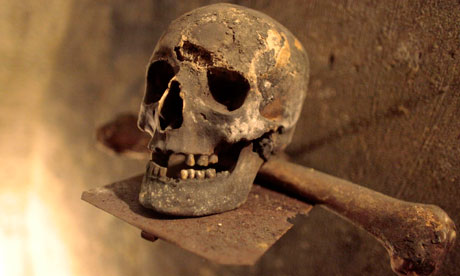 Image Source
These were not savages or brutes. They were sailors.
Precisely a week later, their unconventional meal was gone. In the throes of more woes, they were rescued by the Indian a British whale ship. It had been 90 long days since Essex sunk.
How did the rest of the guys fare?
Lawson Thomas died on January 20 and the same debate played out. The outcome was the same.
THEY ATE HIM.
Charles Shorter died on January 23.
Isiah Shepard died on January 27.
Samuel Reed died on January 28.
There was a harvest of food.
THEY ATE THEM.
On January 28th still Obed Hendricks, Joseph West and William Bond in one boat became separated from Captain Pollard's boat.
To this day. No one has seen them.
February 1st in Captain Pollard's boat saw the harvest of bodies become a famine of bones.
No one had died. The remaining men were all in a hopeless condition. Death was imminent. They had grown accustomed to their new delicacy (wait let me puke...waoraooahahh...hm.. I feel much better.)
Yes I was saying they had grown accustomed to ehmm their meal. The decision was even quicker this time.
A sacrificial lamb was needed. They couldn't place an advert and even if they could who would consider such a career? The career prospects of a sacrificial lamb is not exactly stellar. They drew lots.
Guess who would draw the black (?) spot? (I would rather call it white spot. I wonder why black is used mostly in the negative sense. blackmail. black market. black sheep. Anyway I would rather say white spot, because it was an all white crew. They were no blacks. So white spot is apt.)
So guess who drew the white spot? No it wasn't Captain Pollard. It was his young 17 year old cousin named-
What do you think an apt name would be in this situation? Aha you were close this time. His name was Coffin.
Owen Coffin. Now I know some people think there is nothing in a name! Some people think it's pure baloney to even suggest so. I do believe there is something in a name. Most people won't admit it. But names have a weird correlation to outcomes. I would explore this a little later in future sea tales. But let's just say the reason people don't name their children Lucifer or Satan is primarily attributable to this reason.
So they had their sacrificial lamb. But they needed who would sign his employment letter. So they drew lots again and Charles Ramsdell got the dishonour of executing his friend for the dinner table.
Captain Pollard, Brazillai Ray, and Charles Ramsdell were left.
Owen Coffin did get a Coffin's burial. But not in a wooden box.
THEY ATE HIM.
Then came the morning of February 11. Brazillai Ray couldn't take it anymore. This time lots were not needed.
THEY ATE HIM.
Two men- a Captain without a ship, a crewman without his men, in the middle of the oceans somewhere far off the coasts of South America.
With bones for company.
Exhausted and bankrupt. Mentally. Physically. Emotionally. Morally. Spiritually.
They kept at it. Survival fueled by the sinews and tendons of decomposed bones of fellow sailors. (..PUKE...waooorrohhh.)
Sorry about that. The image is ever so gory.
But their's is quite a tale innit?
It is strange how in the face of adversity, the fickleness of life gets exposed. All thoughts of commercial profits receded in the harsh conditions these men found themselves. They forgot about whaling. (We have forgotten too. But this tale began with the issue of whaling right? Seems so long ago.)
Fate had dealt them a cruel blow. Stripped of all the unnecessary baggage. What mattered was the privilege to exist.
By the time they were rescued on February 23rd by the whale-ship Dauphin, they had completely gone bunkers and were actually terrified to see their rescuers.
There was a total of 8 survivors. Captain Pollard, Owen Chase, Charles Ramsdell, Benjamin Lawrence, and Thomas Nickerson. The three shipmates-William Wright, Seth Weeks and Thomas Chapple who were left in Henderson were also rescued when they were almost dead on April 5, 1821. I am sure they would have weeded the whole Island with their mouths.
In the end 7 sailors WERE EATEN.
For the gory details of this true story you can check here.
For a first hand account of one of the survivors, you will need to part with about $13.40 if you were to buy Narrative of the Most Extraordinary and Distressing Shipwreck of the Whale-Ship Essex at Barnes & Nobles. But in any event you could skim the chapters of the book. It's fascinating and equally horrid aftermath was captured by Nathaniel Philbrick winner of the National Book Award for his Maritime History account of the Essex tragedy and you could pay his Barnes and Noble page a visit.
I'll end this tale with a legal question. (It's essentially a 'law of, about or surrounding the sea' blog anyway, so don't go all coy with me. We had an agreement remember? If you have forgotten look at the blog mantra up this page below our logo and my first post. You see what it says? Aha now you get my making!)
Anyway don't bale yet. I'm just kidding. No legal questions today. Those would come some other day.
But I do have a moral one that may have a direct bearing on how some issues tend to shape the trajectory of the law.
If you found yourself in such a situation, would you EAT them?