
We started talking Telerobotics chiefly within a transportation context in the last post. You can quickly get up to speed here. It is highly recommended you do, to get the drift of today’s conversation and to aid better understanding of the abbreviations used herein.
Now shall we proceed?
A. Legal issues posed by Telerobotics
Let your imaginations run wild for a moment.
What possible Legal issues do advancements in Telerobotics present?
1. UGVs
Imagine commercial UGVs maybe less than half a century from now in our highways and roads similar to what we have today. Let’s say there is an accident involving two or more UGVs how would liability attach and be apportioned?
Now remember that we are talking unmanned vehicle’s here. This means theoretically that at the time of impact liability cannot be said to have attached to any person. The vehicle may admittedly be controlled remotely by a person in which case a lifting of the veil may well reveal the person (the directing mind and will if you like) to be slammed with liability. But surely one would expect that further advancements in technology may result in a situation where there is no discoverable biological directing mind and will for blame to attach. After all, what stands in the way of technology unfurling to the extent that an inbuilt preprogramed sensor or chip in the UGV is the sole directing mind and will as against a scenario where a biological person controls the UGV remotely? What happens in such cases?
Even if precision engineering entails a situation where UGVs negotiate heavy traffic without ramming into each other, how about collisions with humans? How are the rules for seeking redress following an accident affected? What law enforcement challenges are posed by an absentee directing mind and will or a non existent one?
You think I am being unnecessarily esoteric and all these is far in the future right? Think again!
I’ll aid your thinking. Watch the video below and see my esoteric legal gibberish suddenly adorn the garb of reality.

Now do I have your attention? Good.
Google is promoting this ‘driverless’ or ‘unmanned’ concept which originally is an idea of Sebastian Thrun, the brilliant Google VP and Fellow, and a Research Professor at Stanford University.
The concept of civilian unmanned vehicles has a lot of potentials to change transportation law as we know it. In June 2012, Nevada made history and became the first state in the US to pass legislation that allows “autonomous” cars on it’s roads.
The Assembly Bill No. 511–Committee on Transportation states in its preamble that it is “AN ACT relating to transportation; providing certain privileges to the owner or long-term lessee of a qualified alternative fuel vehicle; authorizing in this State the operation of, and a driver’s license endorsement for operators of, autonomous vehicles; providing a penalty; and providing other matters properly relating thereto”
Imagine how Traffic laws, the laws of Torts, Insurance, Contract and even Transportation Law would forever be redefined as the ‘unmanned’ fever takes hold in road transportation.
2. UAVs
Now to the very controversial one-Drones!
The legal issues and implications here read like a plot from a blockbuster novel or a box office hit movie starring an unusual culprit as aggressor or “boss”- the unmanned area vehicle.

For the blockbuster feel and the insider story of someone who had once been the directing will if not mind of a drone grab Lieutenant Martin’s book here. He’s been there done that.
Drones have given these aerial category of unmanned vehicles a very bad name. At the very least the use of drones have changed international warfare forever. It has also changed International law substantively. The traditional notion of Territorial Sovereignty of a nation over its airspace has been shrugged aside with casual if not petulant disdain by the US as it wages its war on terror. Unilateral strikes and action a favourite policy of the US has and continue to deal mortal blows on Multilateralism.
Recently Christof Heyns, the UN special rapporteur on extrajudicial killings, summary or arbitrary executions, told a conference in Geneva that President Obama's attacks in Pakistan, Yemen and elsewhere, carried out by the CIA, would encourage other states to flout long-established human rights standards.
In his strongest critique so far of drone strikes, Heyns suggested some may even constitute "war crimes". His comments come amid rising international unease over the surge in killings by remotely piloted UAVs.
The US has defended drone attacks as self-defence against al-Qaida and has refused to allow judicial scrutiny of the UAV programme.
Drone strikes remain controversial even within the U.S. The US Attorney General and other high ranking officials of the Obama Administration continues to grapple with the knotty conundrum of a shady if not dubious legal authority or justification for the use of drone strikes.
According to Obama’s counterterrorism chief, John Brennan, the legal authority for the drone strikes derives from the Authorization for Use of Military Force (AUMF) passed by the Congress in September 2001 to authorize the attack on Afghanistan. He notes that there is "nothing in the AUMF that restricts the use of military force against al-Qaida to Afghanistan".
Assuming that Brennan’s long shot argument is tenable (I seriously have my doubts) does it justify the targeted killing of an American citizen, in a country with which the United States was not at war, in secret and without the benefit of a trial? Surely this stands the very essence of democracy on its head.
Whatever happened to the Due Process Clause of the Constitution and all the other elaborate safeguards of democracy?
The Justice Department’s Office of Legal Counsel prepared a lengthy memo justifying the extraordinary step of the killing of Mr Awlaki in September 2011, (along with a fellow propagandist, Samir Khan, an American citizen who was not on the target list but was traveling with him) asserting that while the Fifth Amendment’s guarantee of due process applied, it could be satisfied by internal deliberations in the executive branch.
One of the latest UAV developments that concerns human rights groups is the way in which attacks, they allege, have moved towards targeting groups based on perceived patterns of behaviour that look suspicious from aerial surveillance, rather than relying on intelligence about specific al-Qaida activists.

We all know that there is cause to entertain genuine fears on that line of thinking. What if the perception is wrong? That something looks suspicious is not proof that it is actually suspicious and in any event how can we guarantee the objectivity of suspicion in the face of stereotypes and racial profiling?
When a drone attack kills innocent citizens of a country who happen to be in the wrong place at the wrong time can the families of the deceased seek legal redress? The USA is not a signatory to the International Criminal Court (ICC) or many other international legal forums where legal action might be brought. It is, however, part of the International Court of Justice (ICJ) where cases can be initiated by one state against another. It remains to be seen if a state can muster the necessary political will to seek justice on behalf of her innocent citizens murdered in a drone attack.
Away from the maddening crowd of military drone attacks, what legal issues permeate the use of commercial drones?
With the US preparing to open its skies to a new fleet of commercial drones, on course to be permitted by 2015 this question is both relevant and germane.
Experts predict dozens of tasks will be carried out by autonomous drones, from dusting crops and washing skyscraper windows, to shadowing celebrities to paparazzi photo shots, to espionage and counter espionage, to law enforcements especially in enforcement of traffic laws, drug cartels monitoring and even crime prevention.
What legal issues do commercial drones implicate?
Think for starters re-writing of privacy laws. Commercial Drones represent a stunning constriction of our private space and not just in the impersonal way that the internet has ensured but in a more physically obtrusive way.
Think Terrorism and Hijack. The wrong drone in the wrong hands. OMG!

Think Collisions and Crashes. Drone going down

All these present enormous legal challenges.

3. ROVs
By now we are pretty much attuned to imagining the possible legal issues when we talk ‘unmanned’. All we need do here is apply our imagination and adapt it to the terrain in question. ROVs rule the oceans and seas.
The legal implications of having no one on-board a ship is a stuff for legends and myths.
Ever heard of the story of the Mary Celeste or the Ghost Ship as it is infamously called? It was an American brigantine merchant ship famous for having been discovered on 4 December 1872 in the Atlantic Ocean, unmanned and apparently abandoned.
“The fate of her crew has been the subject of much speculation. Theories range from alcoholic fumes, to underwater earthquakes, to waterspouts, to paranormal explanations involving extra-terrestrial life, unidentified flying objects (UFOs), sea monsters, and the phenomenon of the Bermuda Triangle, although the Mary Celeste is not known to have sailed through the Bermuda Triangle area. The Mary Celeste is…the archetypal ghost ship, since she was discovered derelict without any apparent explanation, and her name has become a synonym for similar occurrences.”

Unlike ghost ships, for ROVs or unmanned vehicles that ply water bodies we do not need to fret about the fate of the crew as there is no crew (at least in the traditional sense) in the first place. But all the other legal worries that apply to UGVs and UAVs mostly apply mutatis mutandi to ROVs as well.
Unmanned ships have monumental implications for Maritime and Admiralty law.
Imagine the implication for piracy if you have unmanned vessels with defensive mechanisms on board to thwart unauthorized boarding.
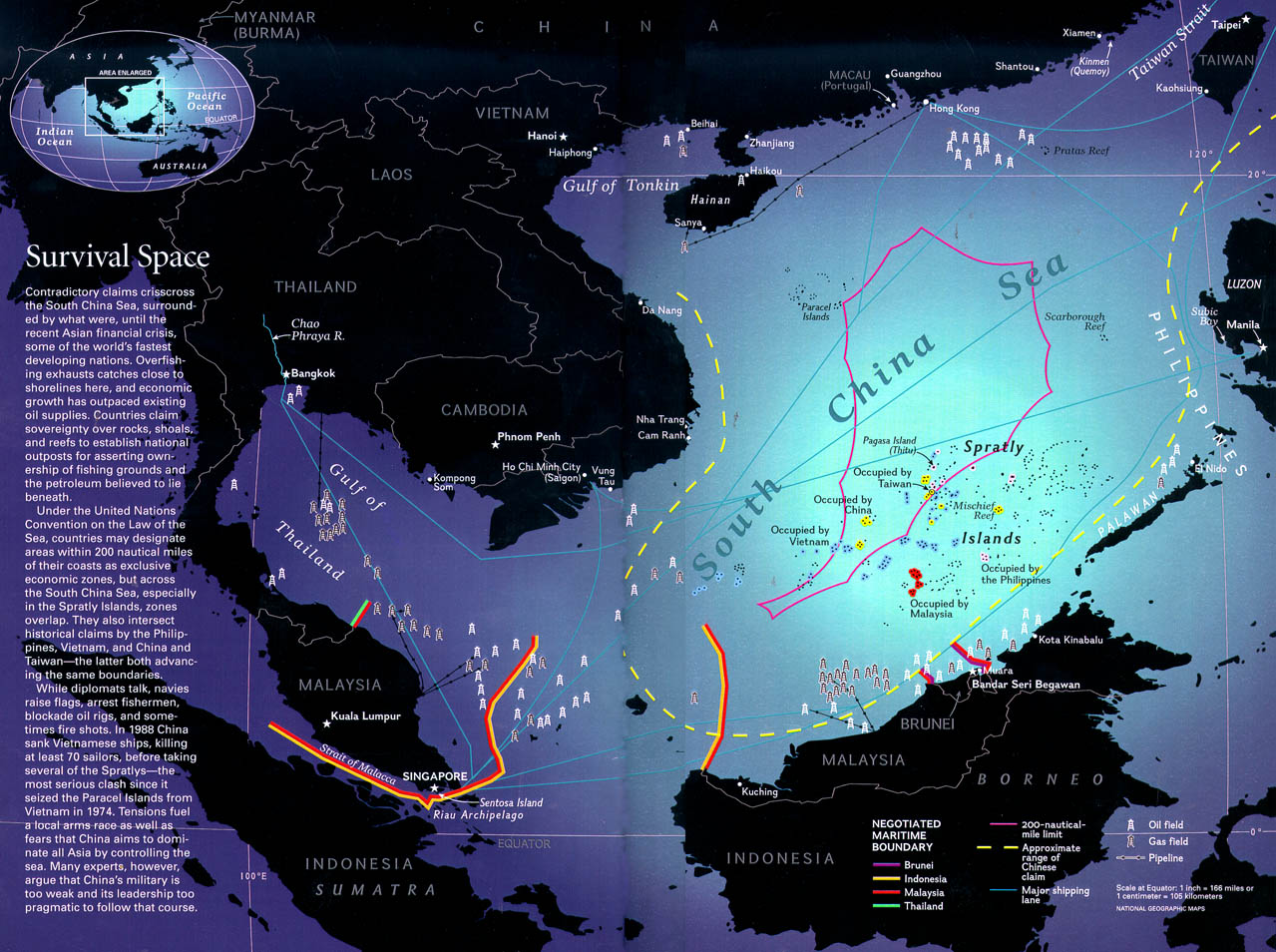
Imagine the effect on global trade and shipping; the redundancy it would create among seafarers; the rewriting of all the major Maritime safety conventions, those relating to prevention of marine pollution and those covering liability and compensation like SOLAS, MARPOL, STCW, COLREG, SUA, OPRC-HNS Protocol, SALVAGE to mention a few; the possibility for underwater espionage and attacks by tech savvy nations and its implications for maritime boundary disputes like that of the South China sea.
B.Challenges posed by Telerobotics
Truth is there are many challenges posed by Telerobotics. Some of the challenges are generic to technological innovation whereas others are peculiar to Telerobotics. We would consider just a few.
1. Technological deficits.
By Technological deficits I mean gaps or vulnerabilities in the system that can be exploited to wreak havoc with disastrous legal consequences.
Technology most invariably do come with certain vulnerabilities. Think computers. Think viruses. Think the internet. Think rogue routers.
Iranian engineers have identified GPS navigation as the "weakest point" of the US's UAV drone arsenal and rightly so too!
US researchers recently created a $US1000 ($993) device that is capable of hijacking an unmanned drone. This naturally raises one’s hairs when it is realized that unmanned aircraft could be turned into terrorist weapons.
“The hijacking device, called a "GPS spoofer", was created by a team led by Todd Humphreys, a radio navigation specialist at the University of Texas, in Austin. Professor Humphreys has demonstrated that his spoofer can be used to take over civilian drones, which navigate using an open network of GPS satellites that have little security. It works by infiltrating the GPS technology that drones rely on for navigation and can be used to pull a drone off course or to crash it deliberately. Now imagine the capacity for mischief much like hackers already display with the internet and computers.”
Same thing applies to UAVs and UGVs.
2. The duality of Technology
Sequel to the first challenge is technology’s Jekyll and Hyde tendencies. Technology is capable of great good and also devastating evil. Picture Nuclear energy used to generate power. Then recoil at the horrors of Hiroshima.

What is to stop unmanned systems in the wrong hands been used as an instrument of terror? Nothing really.
3. Technology’s ascent & law’s disconnect.
The arms of the law is often times notoriously short even if it brags to the contrary. As the ship of technological innovations in the field of Telerobotics continues to drift rudderless into unchartered territories, the paddle of the law is left dangling archaically, hopelessly inept to provide the needed direction.
The law is simply not doing enough to keep pace with technological innovations and the changing rules of engagement. Take for example UAVs (drones precisely) which has as one commentator puts it “become a provocative symbol of American power, running roughshod over national sovereignty and killing innocents. With China, Russia, (North Korea and others) watching, the United States has set an international precedent for sending drones over borders to kill enemies.”
Has international law evolved to meet these unsavoury realities? Not quite.
4. A new world order?
Is Telerobotics going to usher in the long awaited Artificial Intelligence era with this epoch becoming the subject of wistful raconteurs? Are we going to have a new world order where man would reach the apogee of passivity as robots take over most spheres of active endeavour? What are the implications for the world economy in terms of redundancy of the workforce? Are these implications necessarily progressive?
How about the social implications? What would be considered socially acceptable in a Telerobotics world? What of the effect on the human psyche? Would we suffer dejection from knowledge that our unmanned machines are capable of so much more on their own than we ever will be able to accomplish accompanying them? Are we going to develop some sort of psychosis, perversions, insecurities etc.? 
Image Source
The permutations are endless.
You can make up infinite scenarios. Suffice it to say that Telerobotics does indeed present very intriguing possibilities.
Enjoy your weekend!


I like your blog and which information you provide us through this blog it is really appreciated.
ReplyDeleteTransport Law